Wild Files · Species File No. 17 · Tree
Western Redcedar
Thuja plicata
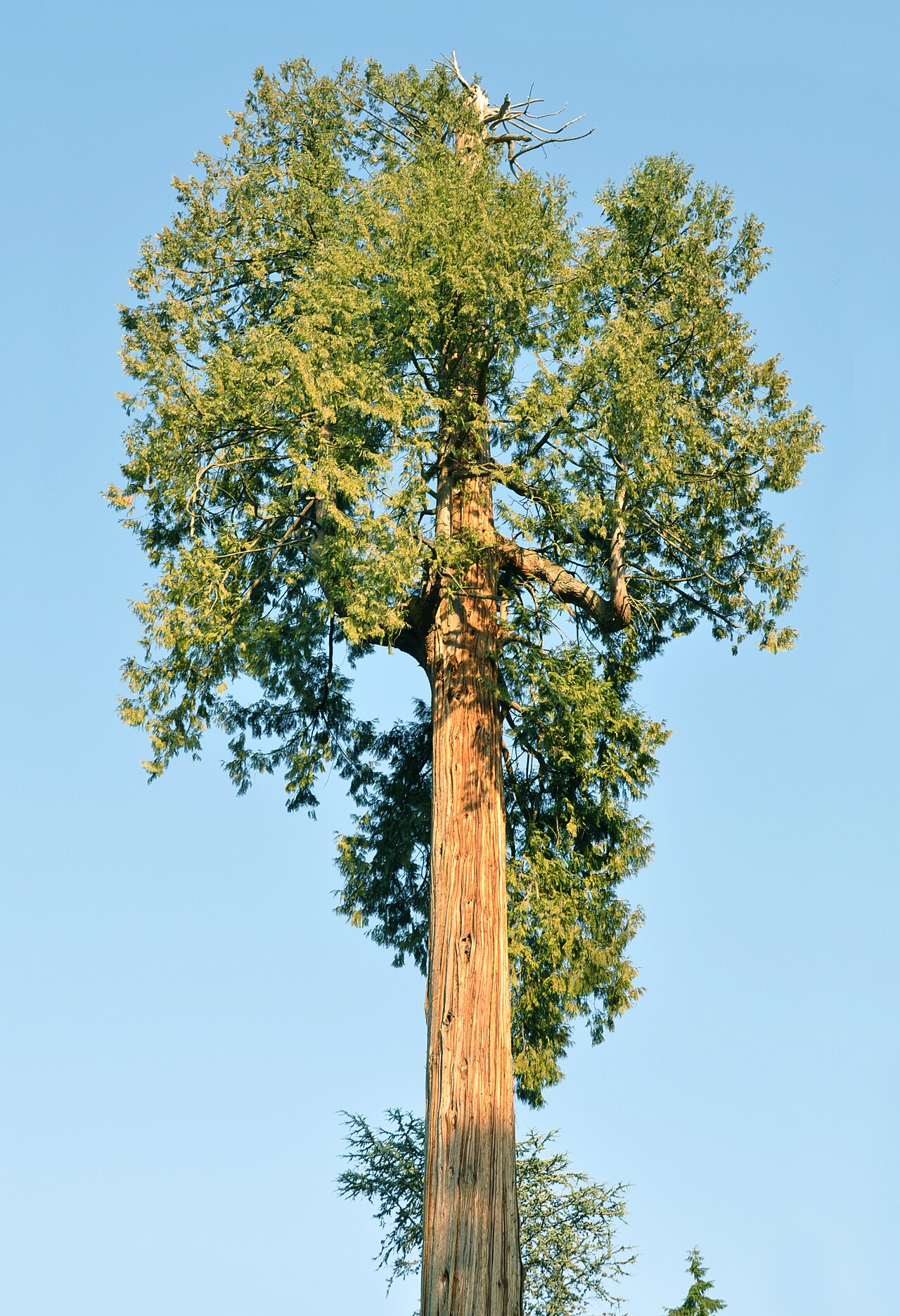
Meet the Western Redcedar
Fact block — copy it for your StoryMap
The western redcedar is a giant evergreen tree. Evergreen means it stays green all year. Its leaves are not needles. They are tiny and flat, like little scales pressed together in soft, drooping sprays. If you crush them, they smell sweet, a little like pineapple. The bark is thin and stringy, and it peels off in long ribbons. These trees grow very tall, often 70 to 100 feet high. The biggest ones live more than 1,000 years.
The western redcedar is a massive evergreen conifer, which means it keeps its leaves and makes seeds in cones all year. Instead of needles, it has tiny scale-like leaves that overlap in flat, fern-like sprays. Crush a spray and it gives off a strong scent that some people say smells like pineapple. The thin, gray-brown bark peels off in long fibrous strips. West of the Cascade Mountains, the tallest trees can top 200 feet, and the trunk can swell wide at the base. These are some of North America's longest-living trees, with the oldest verified specimen reaching about 1,460 years.
Where It Lives
Fact block — copy it for your StoryMap
Western redcedars grow along the Pacific Coast, from Alaska down through Washington and Oregon. They love wet, cool places, which makes the Hoh Rain Forest in Olympic National Park a perfect home. These trees like soil that stays damp, so you often find them in low, moist spots and near streams. They can grow from sea level up into the mountains. Baby redcedars can sprout in deep shade under bigger trees and wait there for their turn to grow tall.
Western redcedar grows along the Pacific Coast from southeast Alaska through British Columbia, Washington, and Oregon into northern California, which includes the rainy Olympic Peninsula where the Hoh Rain Forest sits. It thrives in cool, cloudy summers and wet, mild winters, and it favors moist ground, low valley bottoms, and the edges of mountain streams. In drier eastern areas it crowds into narrow canyons where stream water keeps its roots wet all summer. Because it is very shade tolerant, seedlings can survive for years in the dim forest understory, then grow upward when a gap opens in the canopy.
Its Job in the Forest
Fact block — copy it for your StoryMap
The western redcedar feeds and shelters many animals. Black-tailed deer and Roosevelt elk nibble its leaves and young shoots, especially in winter when other food is scarce. Birds like woodpeckers, swallows, and chickadees make nests in holes in the trunk. Bears, raccoons, and skunks hide and den inside hollow old trees. This tree is also called the tree of life by coastal Native American tribes, who have used its wood and bark for canoes, baskets, and clothing for thousands of years. Without it, the forest would lose food, homes, and history.
Western redcedar is a quiet provider in the rainforest food web. Roosevelt elk and black-tailed deer browse its foliage and seedlings, leaning on it in fall and winter when other greenery disappears. Cavity-nesting birds such as woodpeckers, sapsuckers, swallows, and chickadees raise young inside its trunk, and old hollow trees give bears, raccoons, and skunks dens and cover. Pine siskins prize its seeds. For Pacific Northwest coastal tribes it is the culturally vital tree of life, shaped into dugout canoes, longhouses, baskets, rope, and clothing for thousands of years. Remove this tree and the forest loses food, nesting sites, and a living cultural anchor at once.
Fast Facts
Fact block — copy it for your StoryMap
- Scientific name: Thuja plicata
- Height: usually 70 to 100 feet, with some over 200 feet west of the Cascades
- Age: the oldest can live well over 1,000 years
- Leaves: tiny flat scales in drooping sprays that smell like pineapple when crushed
- Home: wet Pacific Coast forests from Alaska to northern California, including the Olympic Peninsula
- Nickname: the 'tree of life' for Pacific Northwest coastal tribes
Where these facts come from
USDA Forest Service · Wikipedia · iNaturalist — real photos & sightings