Wild Files · Species File No. 20 · Tree
Vine Maple
Acer circinatum
Meet the Vine Maple
Fact block — copy it for your StoryMap
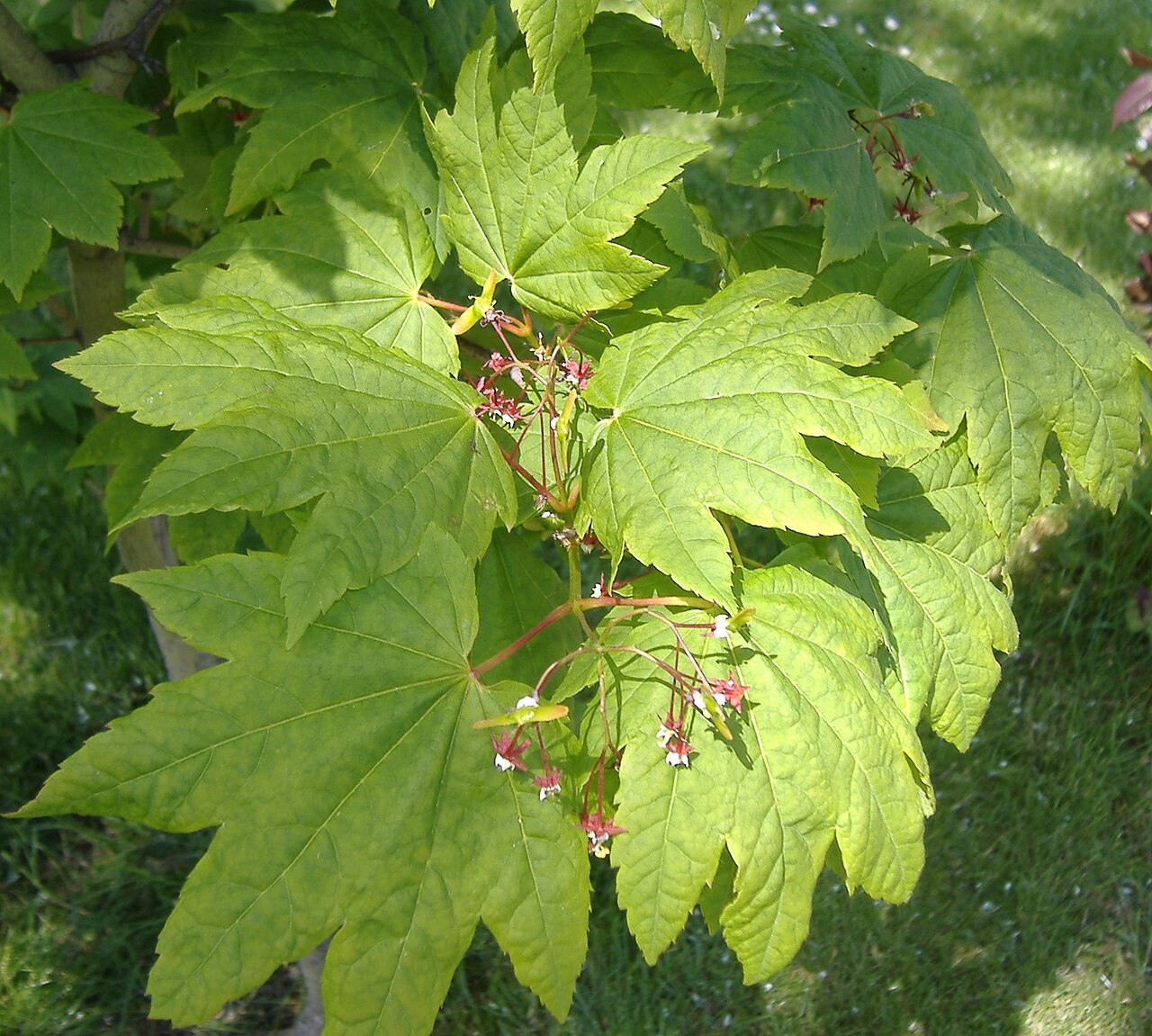
Meet the vine maple, the bendy little tree of the rainforest floor. Instead of one straight trunk, it grows many slim, arching stems. Its leaves are almost perfectly round, with 7 to 11 pointy lobes (the finger-like parts of a leaf) spread out like a fan. In fall, those leaves blaze yellow to orange-red. Here is the wild part: when a branch bends down and touches the soil, it can take root and grow into a leafy arch.
The vine maple (Acer circinatum) is a small, sprawling maple that usually grows 16 to 26 feet tall, more like a thicket of slender, smooth-barked stems than a single-trunk tree. Its coarsely toothed leaves have 7 to 11 lobes whose points trace a nearly circular outline, and in autumn they turn bright yellow to orange-red. Its small flowers pair dark red sepals with five yellow petals, and its seeds ride away on paired wings called samaras. The vine maple's signature move is layering: a flexible branch arches over to the ground, takes root where it touches, and grows into a natural arch, letting one plant spread into a whole tangle of stems.
Where It Lives
Fact block — copy it for your StoryMap
Vine maple lives along the Pacific coast, from southwest British Columbia in Canada down to northern California. The Hoh Rain Forest sits inside that range. Look for it in the understory, the shady layer of plants growing beneath the giant trees. It spreads under Douglas-fir, hemlock, and cedar, the same towering conifers (cone-bearing trees) that make the Hoh famous. It almost never grows far from the ocean, so the Pacific Northwest coast is its true home.
This maple is a Pacific Northwest specialist. Its native range runs from southwest British Columbia to northern California, usually within about 300 kilometers (190 miles) of the Pacific Ocean, and it reaches no farther inland than the east side of the Cascade Range. That puts Olympic National Park and the Hoh Rain Forest squarely in vine maple country. Here it grows in the understory of conifer forests of Douglas-fir, hemlock, and cedar, sprawling through the dim light beneath trees many times its height. Like much of the rainforest around it, vine maple also hosts epiphytes, non-parasitic organisms such as mosses and lichens that grow on other living things without feeding off them.
Feeding the Rainforest
Fact block — copy it for your StoryMap
Vine maple is like a snack bar for the rainforest. Deer, elk, and beavers munch its leaves and bark. Its winged seeds feed squirrels, chipmunks, and many birds, including chickadees, nuthatches, and woodpeckers. Vine maples also cycle nutrients (the chemicals living things need to grow) back into the soil more quickly than conifers do. People use this plant too: the Quinault people used its shoots to weave baskets. Best of all, scientists rank vine maple as Least Concern, which means it is not in danger.
Vine maple earns its keep in the food web. Deer, elk, and even beavers browse its foliage and bark, while its winged seeds feed squirrels, chipmunks, and a long roster of birds: nuthatches, chickadees, grosbeaks, warblers, waxwings, vireos, and woodpeckers. It gives back below ground too, because vine maples cycle nutrients more quickly than conifers, so nutrients from their leaves return to the forest floor faster. Without vine maple, browsers and seed-eaters would lose a dependable food source. People are part of its story as well: the Quinault people used its shoots to weave baskets. The conservation news is good, too. The IUCN, the global organization that tracks how species are faring, lists vine maple as Least Concern.
Fast Facts
Fact block — copy it for your StoryMap
- Scientific name: Acer circinatum
- Size: Usually 5-8 meters (16-26 feet) tall, occasionally up to 18 meters (about 59 feet)
- Leaves: 7-11 lobes whose points form a nearly circular pattern; bright yellow to orange-red in fall
- Range: Southwest British Columbia to northern California, usually within 300 km (190 mi) of the Pacific Ocean
- Who eats it: Deer, elk, and beavers browse it; squirrels, chipmunks, and many birds eat its seeds
- Status: Least Concern (IUCN)
Where these facts come from
U.S. Fish & Wildlife Service · Wikipedia · iNaturalist — real photos & sightings