Wild Files · Species File No. 21 · Fern
Sword Fern
Polystichum munitum
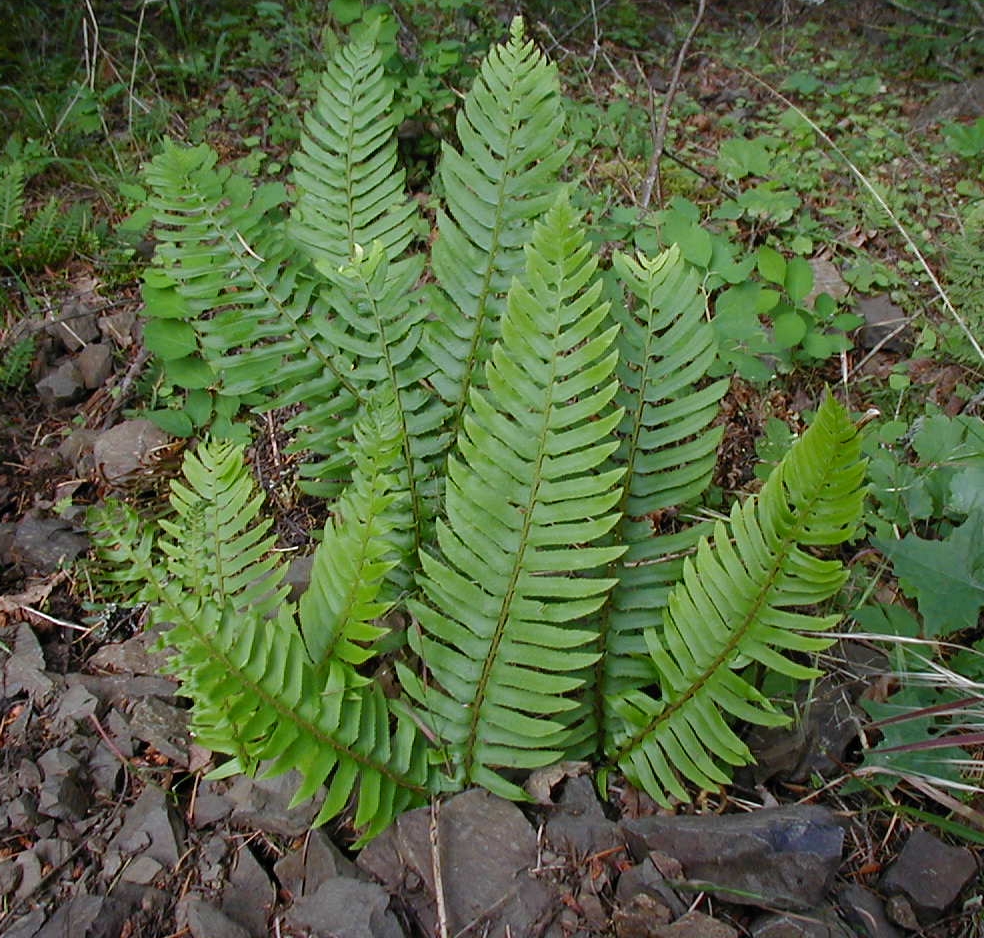
Meet the Sword Fern
Fact block — copy it for your StoryMap
The sword fern is an evergreen plant, which means it stays green all year instead of dying back in winter. Its leaves are called fronds, and one big plant can grow 75 to 100 of them at once, fanning out from the center like a giant green crown. Each little leaflet along a frond has a small lobe at its base that points up like the handle of a sword. That sword-handle shape is how the fern got its name.
The western sword fern is a tough evergreen that keeps its leaves, called fronds, green for several years instead of dropping them each fall. A single crown can hold 75 to 100 leathery fronds, and the longest ones stretch close to 1.8 meters (about 6 feet), arching outward like a green fountain. Look closely at one leaflet: at its base sits a little upward-pointing lobe shaped like the hilt, or handle, of a sword, which is how the plant earned its name. Flip a frond over and you may spot two neat rows of round dots called sori, the spots where the fern makes spores to grow new ferns.
Where It Lives
Fact block — copy it for your StoryMap
Sword ferns love the cool, wet, shady forest floor, so the Hoh Rain Forest in Olympic National Park is a perfect home. They grow under big evergreen trees like western hemlock and Sitka spruce, where little sunlight reaches the ground. You can find this fern all along the Pacific coast, from southeastern Alaska down to southern California. Whole patches can fill room-sized clumps in the shady gaps under the trees, turning the understory deep green.
Sword ferns thrive on the moist, shady understory of cool coniferous forests, which makes the dripping Hoh Rain Forest of Olympic National Park an ideal home. They spread along the Pacific coast all the way from southeastern Alaska to southern California, and they grow best in damp, nutrient-rich soil beneath towering evergreens such as western hemlock, Sitka spruce, and Douglas-fir. In the deep shade where many plants struggle, sword ferns flourish, and their room-sized clumps fill the shady understory gaps so completely that they become one of the most important ground plants in these Northwest forests.
Its Job in the Forest
Fact block — copy it for your StoryMap
Sword ferns are like a green report card for the forest. When you see lots of them growing thick and healthy, it usually means the soil is rich and moist and the forest has been left undisturbed for a long time. Long ago, Native peoples of the Pacific Northwest used this fern too. They roasted and peeled the underground stems, called rhizomes, to eat in spring, and they used the fronds to line cooking pits and drying racks.
Sword ferns act as an indicator plant, meaning their lush growth signals a moist, nutrient-rich site that has often been undisturbed for many years. They are one of the most important understory plants in productive Pacific Northwest forests, and their dense clumps build leafy cover near the ground. They are also survivors: a wildfire can burn off the fronds, but the plant often resprouts from its underground stems, called rhizomes, once the fire passes. People have long depended on this fern as well. Pacific Northwest tribes, including the Quileute, Makah, and Klallam, roasted and peeled the rhizomes for food in spring, and they used the fronds to line cooking pits, drying racks, and even bedding.
Fast Facts
Fact block — copy it for your StoryMap
- Scientific name: Polystichum munitum
- Spot it by: the little sword-handle lobe at the base of each leaflet
- Size: a crown of 75 to 100 fronds, the longest near 1.8 meters (about 6 feet)
- Evergreen: keeps its leathery fronds green through every season
- Home: shady, moist conifer forests from southeastern Alaska to southern California
- Good sign: thick patches point to rich, moist, undisturbed forest
Where these facts come from
USDA Forest Service · Wikipedia · iNaturalist — real photos & sightings