Wild Files · Species File No. 11 · Bird
Steller's Jay
Cyanocitta stelleri
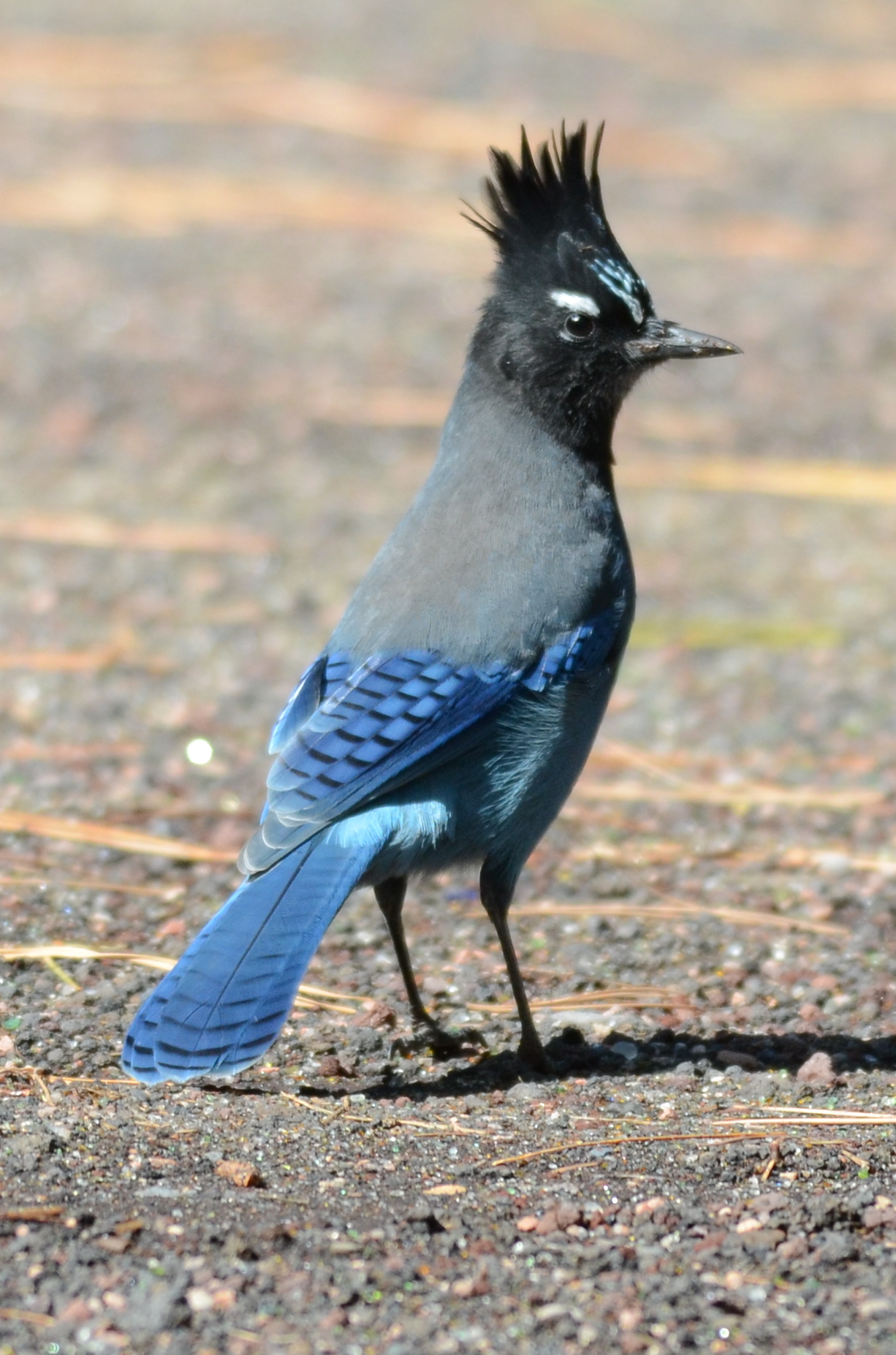
Meet the Steller's Jay
Fact block — copy it for your StoryMap
Meet one of the loudest birds in the forest. The Steller's jay wears a black head with a tall crest — a pointy tuft of feathers — and a body of deep, shimmering blue. It belongs to the corvid family, the same clever group as crows and ravens. Its best trick? It can copy the scream of a red-tailed hawk so well that other birds dive for cover. Listen for its harsh shack-sheck-sheck-sheck call echoing through the trees.
The Steller's jay is the Pacific Northwest's resident trickster: a crow relative dressed in charcoal black and electric blue, topped with the only crest you'll see on a jay west of the Rocky Mountains. It earned its name in 1741, when the German naturalist Georg Wilhelm Steller became the first European to record one. Like other corvids, it is a gifted mimic. It can imitate red-tailed hawks, red-shouldered hawks, and even ospreys — and scientists have found that jays adjust which calls they use depending on what kind of predator they detect. That means the mimicry is not random noise; it works as a warning system and a way to defend territory, sending other birds scrambling for cover.
Where It Lives
Fact block — copy it for your StoryMap
Steller's jays live in coniferous forests — forests full of evergreen trees with needles and cones — across western North America. Their home range stretches all the way from southern Alaska down to northern Nicaragua in Central America. The Hoh Rain Forest sits right inside that range, and its giant evergreens make perfect jay habitat. Jays on the Pacific coast look extra dark, with almost no white markings on their faces. Keep your snacks zipped up: these birds are famous for raiding picnic tables and campsites.
Stand under the giant evergreens of the Hoh Rain Forest and you are in prime Steller's jay country. The species ranges across western North America, from southern Alaska all the way to northern Nicaragua, favoring coniferous and pine-oak forests at low to moderate elevations — though birds occasionally reach the tree line and may drop lower for winter. It is the only crested jay west of the Rocky Mountains; east of the Rockies, its close cousin the blue jay takes over, and the two sometimes interbreed where their ranges meet. Pacific coastal jays, like those around Olympic National Park, have faint or no white face markings, giving them a darker look than inland birds. The jay is so iconic here that nearby British Columbia made it its provincial bird.
A Job in the Food Web
Fact block — copy it for your StoryMap
The Steller's jay is an omnivore, which means it eats both plants and animals. It munches seeds, nuts, and berries, plus insects, eggs, and even small rodents. Here's the important part: jays hide extra food, burying seeds in the ground or tucking them into trees to eat later. That habit moves seeds to new spots around the forest. Steller's jays are doing well — scientists list them as a species of least concern. You can help keep them wild by never feeding them, even when they beg at your picnic.
In the rainforest food web, the Steller's jay plays more than one part. About two-thirds of its diet is plant matter — seeds, nuts, and berries, with conifer seeds and acorns as staples outside the breeding season — while the other third is animal matter: insects, small rodents, lizards, and the eggs and nestlings of other birds, including seabirds like the marbled murrelet. That makes the jay both a forest gardener and a predator. When it caches food — burying seeds in the soil or stashing them in trees for later — it carries seeds to new places. The species is rated least concern, but there's a catch: jays fed by people can become dependent on handouts. The best way to help a "camp robber" is to keep human food to yourself.
Fast Facts
Fact block — copy it for your StoryMap
- Scientific name: Cyanocitta stelleri, in the corvid family with crows and ravens
- Size: 30–34 cm (12–13 in) long; weighs 100–140 g (3.5–4.9 oz)
- Range: Western North America, from southern Alaska to northern Nicaragua
- Diet: Omnivore — about two-thirds plants (seeds, nuts, berries) and one-third animals (insects, eggs, small rodents)
- Status: Least concern (IUCN)
- Famous for: Mimicking red-tailed hawk calls and raiding campsites — rangers call them "camp robbers"
Where these facts come from
National Park Service · Wikipedia · iNaturalist — real photos & sightings