Wild Files · Species File No. 25 · Moss
Stair-step Moss
Hylocomium splendens
Meet the Stair-step Moss
Fact block — copy it for your StoryMap
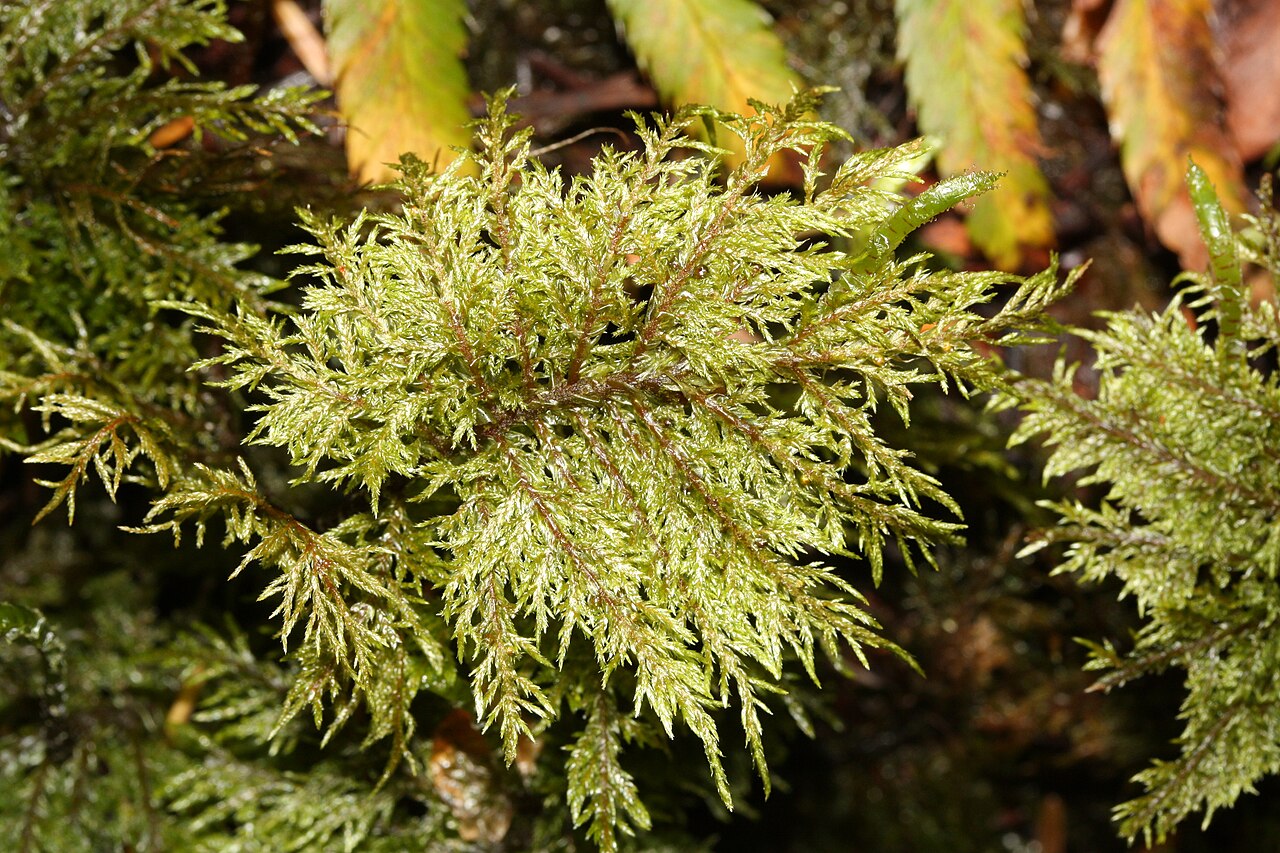
Stair-step moss is a soft, feathery moss that builds its own tiny staircase. Every year it grows a new layer, or step, on top of the layer from the year before. That means you can guess how old a clump is by counting its steps, almost like counting tree rings. The moss is olive green, yellowish, or sometimes reddish, with thin reddish stems. Each stem grows about 10 to 15 centimeters long, which is about the size of your hand.
Stair-step moss earns its name from a clever growth habit: each year a new frond sprouts from the middle of last year's frond, stacking up like the steps of a staircase. Because one new step is added every year, you can estimate a clump's age just by counting the layers. The plant is generally olive green, yellowish, or reddish green, with slender reddish stems that reach about 10 to 15 centimeters long. It is a perennial, meaning the same plant lives and grows for many years, with fresh green growth riding on top of its own older, dying sections below.
Where It Lives
Fact block — copy it for your StoryMap
In the Hoh Rain Forest and across Olympic National Park, stair-step moss carpets the forest floor and drapes over fallen logs. It grows on soil, on rotting wood, and on rich, dark humus (broken-down leaves and plants). One surprising thing: this moss is not really rooted into the ground. It rests on top instead and soaks up water and food from rain and the moist air, which is why a rainy place like the Hoh is perfect for it. It also grows far beyond here, from Alaska all the way to Oregon and California.
Stair-step moss thrives in cool, moist coniferous forests, exactly the conditions found in the Hoh Rain Forest and around Olympic National Park. Here it spreads across the forest floor and over decaying logs, also taking hold on humus and shady ledges in damp ravines. Unlike most plants, it is not rooted in the ground and is nearly independent of the soil beneath it, pulling in moisture and nutrients straight from frequent rainfall and protection from drying out. Its range stretches from Greenland to Alaska, south to North Carolina, and west to Oregon and California, but soggy coastal forests like the Hoh are some of its favorite homes.
Its Role in the Rainforest
Fact block — copy it for your StoryMap
Stair-step moss is one of the plants that carpets the forest floor and covers fallen logs, building a thick, soft, green blanket. Because it can pile up into mats many centimeters deep, it helps hold moisture in the forest. Deer and caribou sometimes nibble on it, so it is part of the food web here. This moss likes old, settled forests and grows back slowly after a fire, sometimes taking many years to return. That makes it a sign of a healthy, undisturbed rainforest, the kind worth protecting.
Stair-step moss helps shape the spongy green floor of the rainforest, carpeting the ground and cloaking fallen logs in thick mats that can be many centimeters deep. Those mats hold onto rainwater, keeping the forest floor cool and damp for other living things. The moss is also food: it is occasionally eaten by deer and caribou, linking it into the forest food web. It tends to appear in stable, mature forests and is usually killed by fire, taking decades to grow back afterward. Because of that, a carpet of healthy stair-step moss is a good clue that a forest has been left wild and undisturbed for a long time, which is exactly why places like Olympic National Park matter.
Fast Facts
Fact block — copy it for your StoryMap
- Scientific name: Hylocomium splendens
- Other names: step moss, glittering wood moss, splendid feather moss, mountain fern moss
- Size: stems about 10 to 15 centimeters long
- Cool trick: grows one new step each year, so you can count steps to guess its age
- Where it grows: on the forest floor, logs, humus, and rotting wood in cool, moist forests
- Eaten by: sometimes nibbled by deer and caribou
Where these facts come from
USDA Forest Service · Wikipedia · iNaturalist — real photos & sightings