Wild Files · Species File No. 14 · Tree
Sitka Spruce
Picea sitchensis
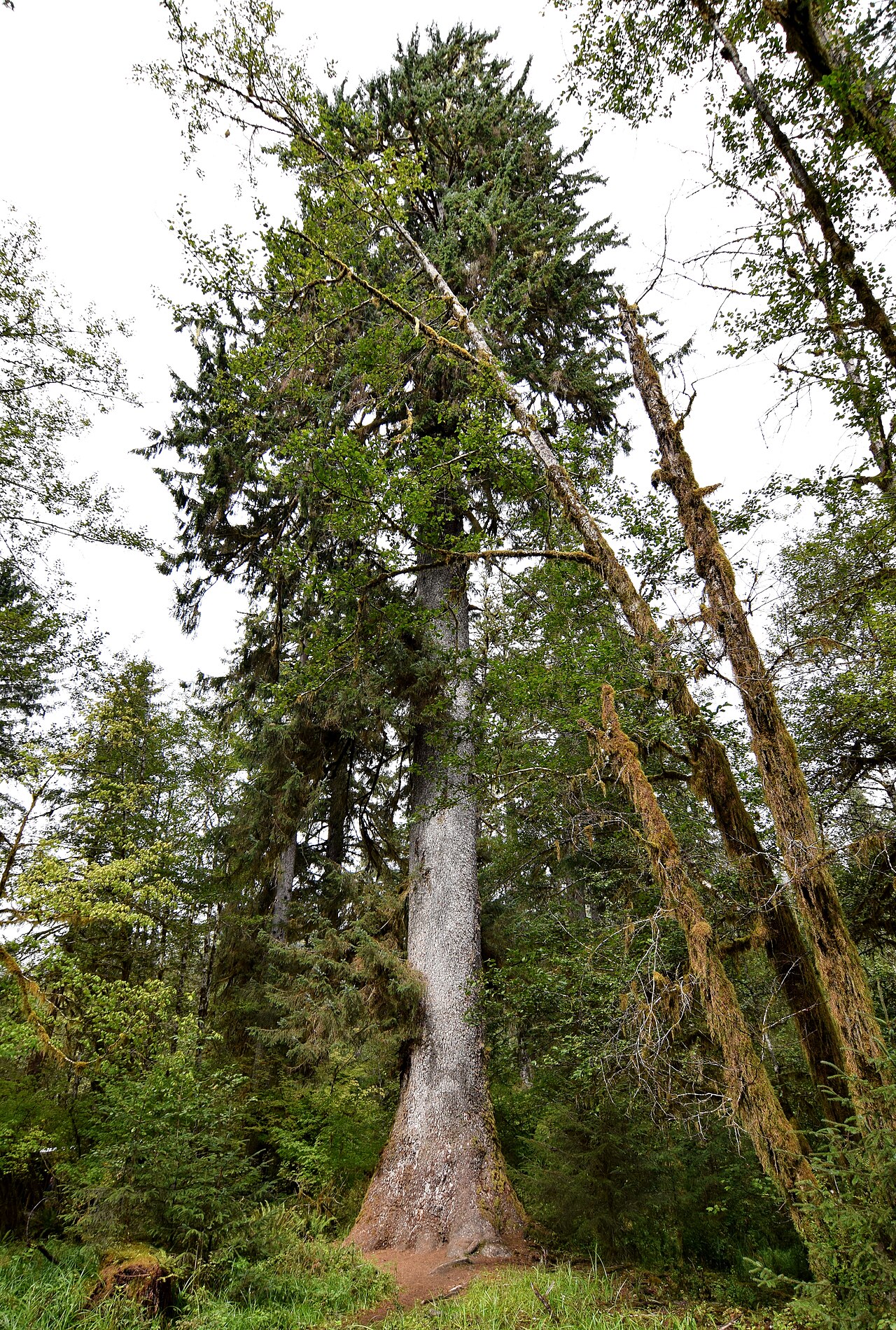
Meet the Sitka Spruce
Fact block — copy it for your StoryMap
The Sitka spruce is the biggest spruce tree in the world. A spruce is an evergreen tree with needles instead of flat leaves. This giant can grow more than 100 meters tall, which is taller than a 30-story building, and its trunk can be over 5 meters wide. If you touch its needles, watch out. They are stiff and sharp, like tiny green pins. The tree gets its name from Sitka, a town in Alaska.
Meet the largest spruce on Earth. The Sitka spruce can grow to just over 100 meters tall and have a trunk more than 5 meters across, making it the fifth-largest conifer (a cone-bearing tree) anywhere. Its needles are stiff, sharp, and flattened, only about 15 to 25 millimeters long but prickly enough to remember. The bark is thin and scaly, flaking off in small round plates that show a reddish-brown layer underneath. Older trees can shoot up fast, sometimes adding more than a cubic meter of wood in a single year, and the oldest known one lived almost 600 years.
Where It Lives
Fact block — copy it for your StoryMap
Sitka spruce is a coastal tree. It grows in a narrow strip along the Pacific Ocean and almost never lives more than 80 kilometers (about 50 miles) from the sea. It loves cool, rainy places, so the Hoh Rain Forest in Olympic National Park is perfect for it. These forests can get 200 to 500 centimeters of rain a year. The Sitka spruce can even handle salty ocean spray, which would hurt many other trees.
The Sitka spruce hugs the Pacific coast, rarely growing more than 80 kilometers from the ocean, and it thrives in cool, wet temperate rainforests like the Hoh Rain Forest in Olympic National Park, Washington. These forests soak up between 200 and 500 centimeters of rain each year, and the spruce can even tolerate the salty spray blown in off the sea. Farther inland, it follows river floodplains where the soil stays damp. Olympic National Park is also home to the Queets Spruce, the largest Sitka spruce by trunk volume, standing about 74.6 meters tall, so you are exploring this tree's true home territory.
Its Job in the Forest
Fact block — copy it for your StoryMap
A Sitka spruce is like an apartment building for wildlife. Its huge size and thick branches give homes and shelter to many mammals, birds, reptiles, and amphibians. The tree also makes food. In Alaska and British Columbia, its needles can be up to 90 percent of what blue grouse, a chunky forest bird, eat all winter. Without giant trees like this, many forest animals would lose the homes and meals they depend on.
The Sitka spruce is a keystone of the rainforest community, providing critical habitat for a wide variety of mammals, birds, reptiles, and amphibians that nest, hide, and hunt among its branches and roots. It is also a winter food source. In Alaska and British Columbia, spruce needles can make up as much as 90 percent of the winter diet of blue grouse. Because the tree grows taller than almost any other conifer on Earth, it shapes the light and shelter for everything growing below. The good news is that Sitka spruce is listed as a species of Least Concern, meaning these green giants are still secure and doing well across their coastal home.
Fast Facts
Fact block — copy it for your StoryMap
- Scientific name: Picea sitchensis
- Size record: the largest spruce species in the world, growing over 100 meters tall
- Home turf: Pacific coast rainforests, rarely more than 80 km from the ocean
- Needles: stiff, sharp, and only 15 to 25 millimeters long
- Lifespan: the oldest known tree lived nearly 600 years
- Conservation status: Least Concern, still secure in the wild
Where these facts come from
U.S. Fish & Wildlife Service · Wikipedia · iNaturalist — real photos & sightings