Wild Files · Species File No. 02 · Mammal
Roosevelt Elk
Cervus canadensis roosevelti
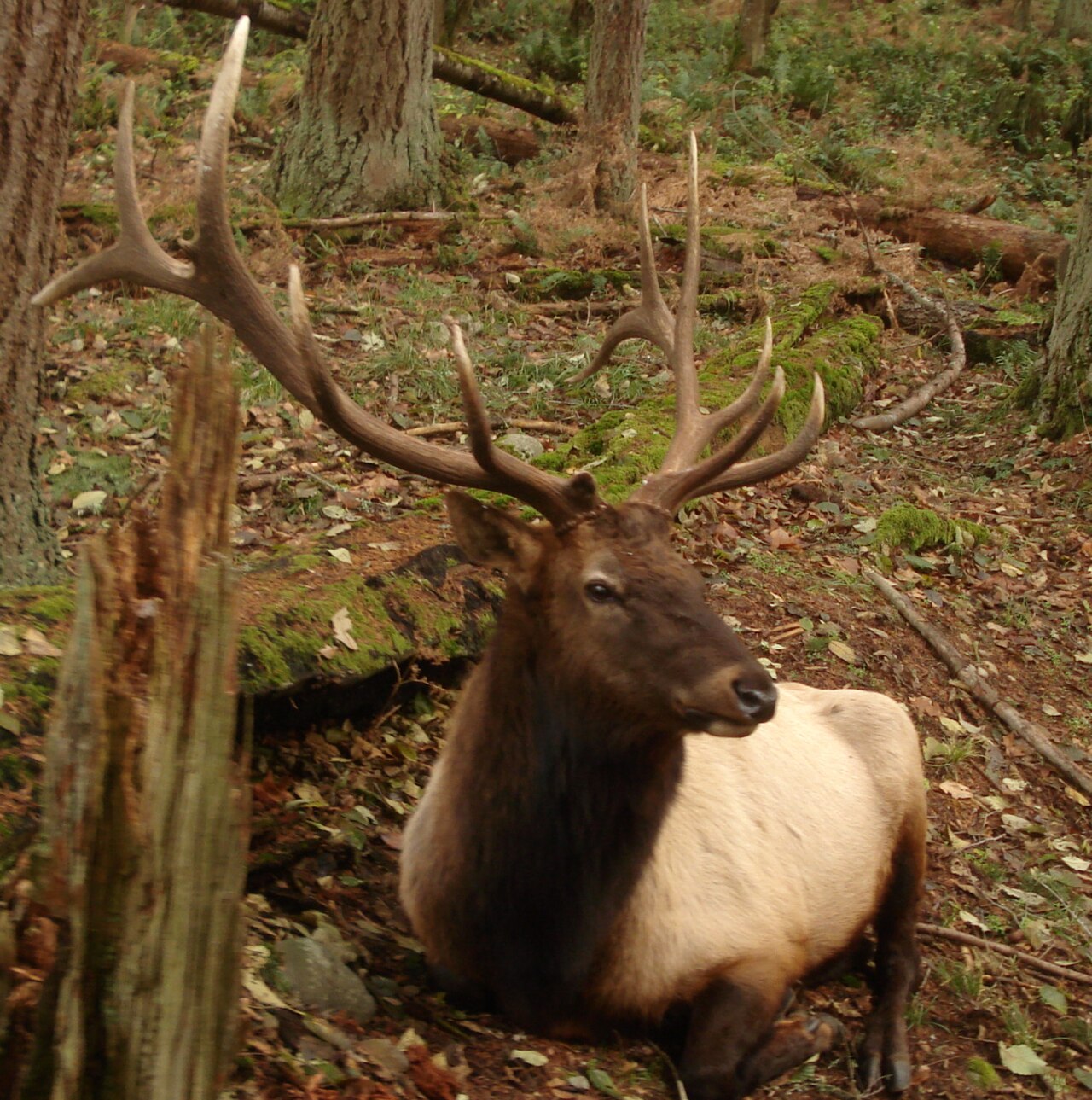
Meet the Roosevelt Elk
Fact block — copy it for your StoryMap
The Roosevelt elk is the biggest kind of elk in North America by body weight. A grown male, called a bull, can weigh from about 700 to 1,200 pounds. That is heavier than a small car engine. Bulls grow large branching antlers on their heads. They shed these antlers and grow new ones every single year. Elk are brown with a pale patch on the rump. This animal was named after President Theodore Roosevelt, who loved wild places.
The Roosevelt elk is the largest elk subspecies in North America measured by body mass. Mature bulls (adult males) typically weigh 700 to 1,200 pounds, and a few rare giants weigh even more. Each year a bull grows a heavy set of branching antlers, then sheds them and regrows a fresh pair the next season. Their coats are brown with an off-white rump patch and a darker mane. The subspecies was named in 1897 by scientist C. Hart Merriam after his friend Theodore Roosevelt, who later, as president, championed the protection of America's forests and wildlife.
Where It Lives
Fact block — copy it for your StoryMap
Roosevelt elk live in the cool, wet rainforests of the Pacific Northwest, including Olympic National Park here in Washington. They like the edges of the forest, where shady trees meet open, grassy clearings. The clearings give them grass to eat, and the trees give them cover to hide and rest. In 1938, President Franklin Roosevelt helped create Olympic National Park, on land first set aside to protect these elk. If you walk the park's rainforest trails quietly, you might spot a herd grazing.
Roosevelt elk make their home in the temperate rainforests of the Pacific Northwest, including Olympic National Park in Washington. They favor edge habitats, where the closed forest meets open grassland. The clearings supply low plants to graze, while the surrounding trees offer shelter and protection. Cows (females) and calves travel together in loose herds, while bulls roam alone or in bachelor groups for much of the year. President Franklin D. Roosevelt visited the region in 1937, and the following year he created Olympic National Park, which helps safeguard their rainforest home today.
Its Job in the Rainforest
Fact block — copy it for your StoryMap
Roosevelt elk are plant eaters, which scientists call herbivores. In warmer months they graze on grasses, ferns, and other low plants. In winter they browse, meaning they nibble shrubs, branches, and young tree sprouts. By eating these plants, the elk help shape what grows in the forest. Elk are also food for other animals. Wolves, mountain lions, and black bears hunt them. So the elk connect the plants they eat to the predators that eat them, like a link in a chain.
As herbivores, Roosevelt elk shape the rainforest through what they eat. From spring into fall they graze on grasses and other herbaceous plants. In winter they switch to browsing woody plants such as elderberry, devil's club, and seedlings of Douglas fir and western redcedar. All that grazing and browsing influences which plants thrive in meadows and clearings. The elk are also a key food source: grey wolves, mountain lions, and black bears all prey on them. By turning plants into food for predators, Roosevelt elk form an important link in the rainforest food web, connecting the green world to the hunters that depend on it.
Fast Facts
Fact block — copy it for your StoryMap
- Scientific name: Cervus canadensis roosevelti
- Size: Bulls weigh about 700 to 1,200 pounds, the largest elk subspecies in North America by body mass
- Antlers: Bulls grow and shed a set of branching antlers every year
- Diet: Grasses and ferns in summer; shrubs, branches, and tree seedlings in winter
- Predators: Grey wolves, mountain lions, and black bears
- Named for: Theodore Roosevelt, in 1897, a few years before he became president
Where these facts come from
National Park Service · Wikipedia · iNaturalist — real photos & sightings