Wild Files · Species File No. 05 · Mammal
River Otter
Lontra canadensis
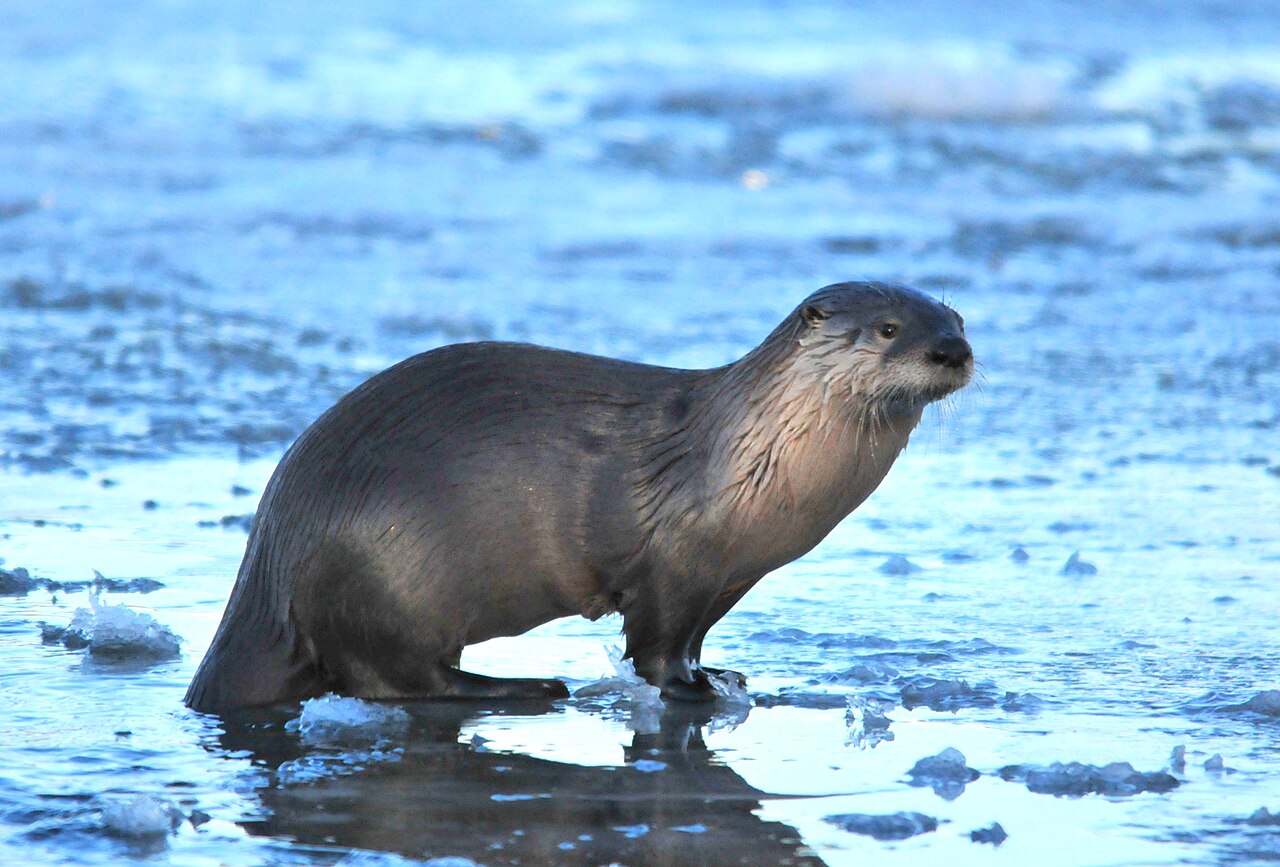
Meet the River Otter
Fact block — copy it for your StoryMap
Meet the river otter, one of the best swimmers in the forest. It is a mammal in the weasel family, built for life in the water. Its thick fur sheds water like a raincoat. Long whiskers help it feel for fish in dark water, and a see-through inner eyelid works like built-in goggles. River otters are famous for play. They wrestle with each other and slide across ice to get around. On land or in the river, an otter always looks like it is having fun.
The North American river otter (Lontra canadensis) is a semiaquatic mammal, meaning it splits its life between water and land, and a member of the weasel family (Mustelidae). Its body is tuned for hunting in rivers: a thick, water-repellent coat keeps it warm, long thin whiskers detect prey moving through dark water, and a transparent inner eyelid shields its eyes while it swims. Adults stretch 66 to 107 centimeters from nose to tail tip, with the muscular tail making up about a third of that length, and weigh 5 to 14 kilograms (11 to 31 pounds). Otters are also famous for play, wrestling with each other and sliding across ice to travel efficiently.
Where It Lives
Fact block — copy it for your StoryMap
River otters live wherever there is water. In Olympic National Park, that means rivers like the Hoh, where they hunt fish in the cold, clear current. You will not spot one high in the rainforest canopy. Otters stay low, along rivers, lakes, marshes, and even the ocean shore. They rest in burrows, which are tunnels near the water's edge. Mother otters do not dig their own dens; they borrow homes that other animals, like beavers, made first.
In the Pacific Northwest, river otters thrive in inland waterways and along the coast: rivers, lakes, wetlands, marshes, and estuaries, the places where rivers meet the sea. Around the Hoh Rain Forest, look for them in the Hoh River itself, where they hunt fish. Despite living in a rainforest, otters are riverbank animals, not canopy dwellers.
Each otter patrols a territory of roughly 8 to 39 square kilometers (3 to 15 square miles) and scent-marks favorite spots to announce its presence. Otters den in burrows close to the water's edge, and females raise their young in dens originally built by other animals, such as beavers. Their needs are simple: a steady food supply and easy access to water.
Why Otters Matter
Fact block — copy it for your StoryMap
River otters are skilled hunters. Most of their food is fish, but they also eat crayfish, which are small animals like little lobsters, and other small creatures. Otters can become food too: bobcats, coyotes, bears, and bald eagles all hunt them. Otters cannot stand dirty water. If a river gets polluted, they disappear. So when you spot an otter hunting fish in the Hoh River, that is good news — a sign the water is clean and healthy.
River otters are highly active hunters. Fish make up most of their diet — in one Alberta study, fish remains turned up in 91.9 percent of otter samples — along with crayfish, amphibians, and other small animals. Otters have predators of their own, including bobcats, cougars, coyotes, bears, and bald eagles.
They also serve as living water-quality monitors: river otters are sensitive to pollution and disappear from tainted waterways, so a thriving otter population is a strong sign of a healthy river. Fur trapping, habitat loss, and pollution once wiped otters out of many regions, but people brought them back. More than 4,000 otters have been reintroduced across 21 U.S. states since 1976, and the species is now listed as Least Concern.
Fast Facts
Fact block — copy it for your StoryMap
- Scientific name: Lontra canadensis
- Family: Weasel family (Mustelidae)
- Size: 66–107 centimeters long (about 2 to 3.5 feet), with the tail making up about one-third of that
- Weight: 5–14 kilograms (11–31 pounds)
- Diet: Mostly fish, plus crayfish, amphibians, and other small animals
- Status: Least Concern (IUCN Red List)
Where these facts come from
U.S. Fish & Wildlife Service · Wikipedia · iNaturalist — real photos & sightings