Wild Files · Species File No. 19 · Tree
Red Alder
Alnus rubra
Meet the Red Alder
Fact block — copy it for your StoryMap
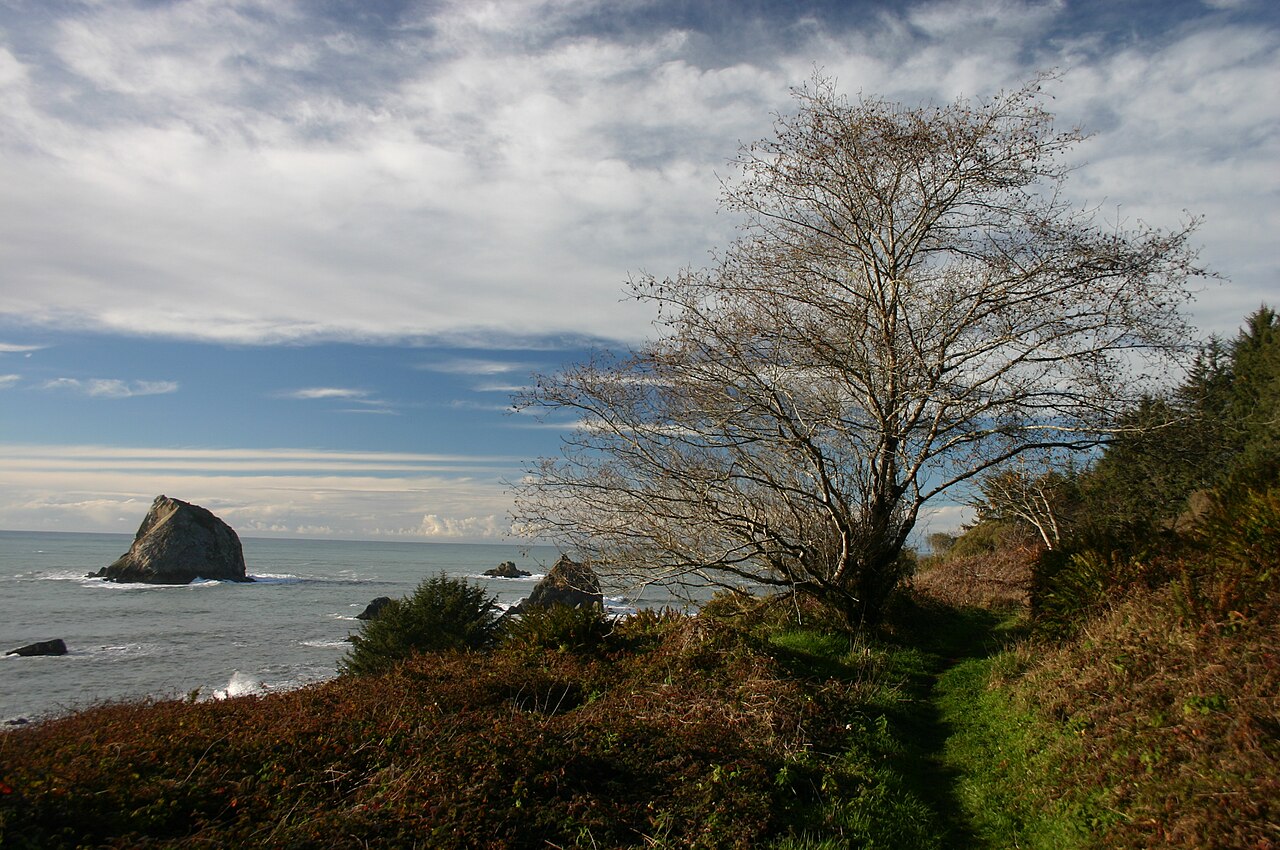
The red alder is a fast-growing tree with smooth, ashy-gray bark. Here is the trick that gives it its name: scrape or bruise the bark and it turns a rusty red, almost like the tree is blushing. Its oval leaves are 7 to 15 centimeters long, and their very edges curl under. That little curl helps you tell it apart from other alders. It is the biggest kind of alder in North America, growing about 20 to 30 meters tall.
The red alder is the largest alder species in North America, usually reaching about 20 to 30 meters tall. On the best sites it can grow 30 to 40 meters. Its bark looks smooth and ashy-gray, but scrape or bruise it and it flashes a rusty red, which is how the tree earned its name. The oval leaves grow 7 to 15 centimeters long with edges that curl under, a clue that sets red alder apart from its relatives. In spring it grows dangling reddish flower clusters called catkins. Later it makes tiny woody cones that look like little pinecones and hold winged seeds.
Where It Lives
Fact block — copy it for your StoryMap
Red alder is the most common hardwood tree in the Pacific Northwest. That region includes the Hoh Rain Forest in Olympic National Park. It almost always grows within about 200 kilometers of the Pacific coast, so this rainy coastal forest is a perfect home. You will spot it along streams and riverbanks and in low, wet spots. It is a pioneer. That means it is one of the first trees to grow on bare ground after a fire, logging, or other changes clear the soil.
Red alder is the most common hardwood tree in the Pacific Northwest, and it almost always grows within about 200 kilometers of the Pacific coast. That makes the wet, low-elevation Hoh Rain Forest in Olympic National Park an ideal home. It thrives in humid places along stream bottoms, riverbanks, and damp slopes. It can handle everything from gravelly soil to soggy, poorly drained clay. Red alder is a pioneer species, one of the first trees to move into freshly exposed soil after disturbances like wildfires, logging, or avalanches. Because it grows so quickly, it often claims open, sunny ground before slower trees can.
Its Job in the Rainforest
Fact block — copy it for your StoryMap
Red alder is a soil-builder. Tiny bacteria called Frankia live in bumps on its roots, and they pull nitrogen out of the air to feed the tree. Nitrogen is a nutrient plants need to grow. When alder leaves drop and rot, that nitrogen enriches the soil so other trees, like Douglas-fir, can grow better. Animals use the tree too. Deer and elk nibble its twigs, beavers sometimes chew its bark, and finches and mice eat its seeds. Without alder, the forest soil would be poorer.
Red alder acts like a natural fertilizer factory for the rainforest. Bacteria called Frankia live inside nodules on its roots, and in this partnership they capture nitrogen from the air. That nitrogen is a nutrient plants need but often cannot get on their own. When the alder's leaves fall and decay, that nitrogen and organic matter enrich the soil. This helps neighbors such as Douglas-fir grow on ground that would otherwise be too poor. The tree feeds animals directly as well: deer and elk browse its twigs and buds, beavers sometimes eat its bark, finches and mice eat its seeds, and tent caterpillars chew its leaves. Remove red alder and the forest would lose one of its main soil-enrichers.
Fast Facts
Fact block — copy it for your StoryMap
- Scientific name: Alnus rubra
- Height: about 20 to 30 meters, the largest alder in North America
- Superpower: fixes nitrogen with Frankia bacteria in its roots to enrich the soil
- Home: streambanks and wet ground within about 200 km of the Pacific coast
- Role: a pioneer tree that is first to grow on bare, disturbed soil
- Lifespan: often around 60 years, up to about 100 years
Where these facts come from
USDA Forest Service · Wikipedia · iNaturalist — real photos & sightings