Wild Files · Species File No. 12 · Bird
Pacific Wren
Troglodytes pacificus
Meet the Pacific Wren
Fact block — copy it for your StoryMap
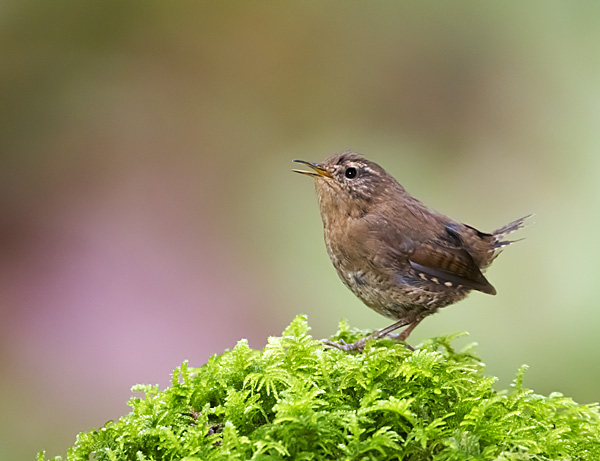
The Pacific Wren is a very small bird that lives in North America. It is rufous brown on top, which means a reddish-brown color, and richly colored underneath. Tiny bars of darker brown cross its wings and tail. For such a small bird, it has a huge voice. People often spot a Pacific Wren by its long, bubbly song before they ever see it hiding in the brush.
The Pacific Wren is a very small North American bird, but it makes an outsized impression. Its feathers are rufous brown (a reddish-brown) above and richly colored below, with darker brown and dusky bars running even across its wings and tail. The bill is dark brown and the legs are pale brown. What makes this wren unforgettable is its song: a long, exuberant string of notes that pours out of a bird barely bigger than your thumb. Males are skilled singers, and researchers have even watched them change the length of their songs near loud highway traffic so they can still be heard.
Where It Lives
Fact block — copy it for your StoryMap
Pacific Wrens love coniferous forests, the kind full of spruce and fir trees with needles instead of flat leaves. The damp, shady Hoh Rain Forest in Olympic National Park is exactly this kind of place. These wrens breed along the Pacific coast from Alaska down to California. They stay busy in the forest year-round, hunting for insects on tree bark and fallen logs even when the weather turns cold and snowy.
Pacific Wrens nest mostly in coniferous forests, especially those of spruce and fir, which is exactly the kind of cool, dripping woodland you find in the Hoh Rain Forest of Olympic National Park. The species breeds along the Pacific coast from Alaska to California, and inland as far as Wyoming and the Black Hills of South Dakota. In winter, birds migrate through and spread across the western half of the United States and Canada. Even though it is an insectivore (an animal that eats insects), the Pacific Wren can stay through moderately cold and snowy weather by foraging for insects on substrates such as bark and fallen logs, so it stays a part of the rainforest all year.
Its Role in the Food Web
Fact block — copy it for your StoryMap
The Pacific Wren is a hunter of small things. It mostly eats insects and spiders, gobbling up tiny creatures that creep across bark and logs. In winter it also takes large pupae, which are insects still wrapped up before they become adults, plus some seeds. By eating so many bugs, the wren helps keep insect numbers in balance. Without busy little birds like this one, the forest would have far fewer insect-eaters at work.
In the rainforest food web, the Pacific Wren is an energetic predator of the small. Its diet is built mainly from insects and spiders, and in winter it also takes large pupae (insects in a resting stage before they become adults) and some seeds. Hunting along bark and fallen logs, the wren helps control populations of the tiny creatures it eats, linking the world of forest insects to the larger animals that rely on small songbirds. Males build several nests, called cock nests, and the female chooses and lines one, laying five to eight white or lightly speckled eggs in April. Each clutch of young wrens depends on a steady supply of forest insects to survive.
Fast Facts
Fact block — copy it for your StoryMap
- Scientific name: Troglodytes pacificus
- Size: A very small North American bird
- Color: Rufous (reddish) brown above, barred with darker brown on wings and tail
- Habitat: Coniferous forests of spruce and fir, like the Hoh Rain Forest
- Diet: Insects and spiders, plus large pupae and some seeds in winter
- Conservation status: Least Concern (IUCN)
Where these facts come from
U.S. Fish & Wildlife Service · Wikipedia · iNaturalist — real photos & sightings