Wild Files · Species File No. 01 · Mammal
Olympic Marmot
Marmota olympus
Found only here Washington's official endemic mammal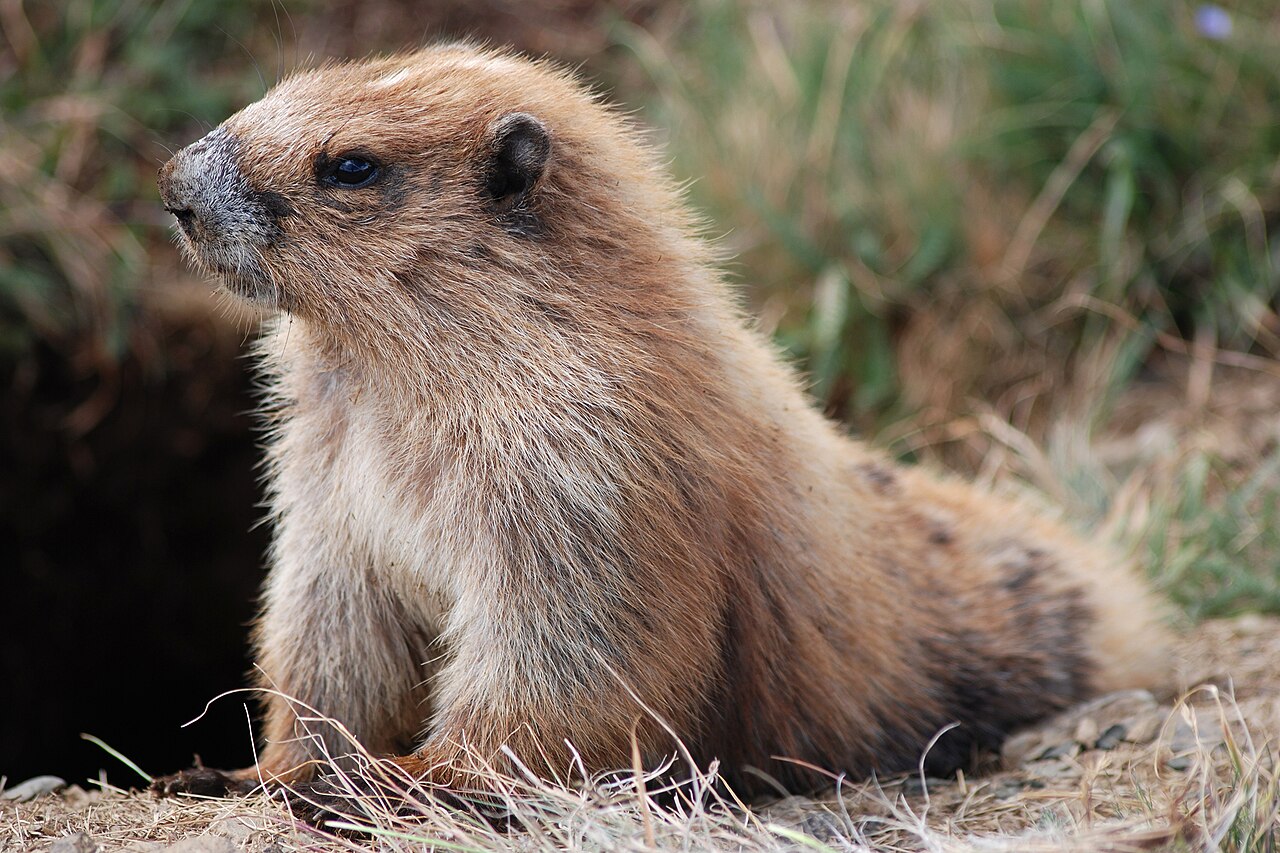
Meet the Olympic Marmot
Fact block — copy it for your StoryMap
The Olympic marmot is a furry animal about the size of a house cat. It lives in only one place in the whole world: the Olympic Mountains of Washington State. When an animal lives in just one place, scientists call it endemic. When a marmot sees danger, it whistles loudly to warn its family!
The Olympic marmot is a large burrowing rodent found nowhere on Earth except the Olympic Peninsula of Washington State — making it an endemic species. Roughly the size of a house cat, it lives in close family groups, greets relatives by touching noses, and sounds a piercing whistle when predators approach. In 2009, Washington named it the state's official endemic mammal.
Where It Lives
Fact block — copy it for your StoryMap
Olympic marmots do not live down in the dark, mossy rainforest. They live in sunny mountain meadows high above the Hoh River valley, inside Olympic National Park. They dig burrows — underground homes with tunnels — where they sleep, hide, and raise their babies.
Olympic marmots live above the rainforest, not in it: their home is the subalpine and alpine meadows of the Olympic Mountains, high over valleys like the Hoh. The same mountain snow and rain that soak the rainforest below shape the marmot's meadow world. Families dig burrow systems for sleeping, escaping predators, raising pups, and their marathon winter hibernation.
Champion Sleeper
Fact block — copy it for your StoryMap
Olympic marmots are champion sleepers. They hibernate — sleep deeply through the cold months — for most of the year! They spend the short summer eating meadow plants to get fat enough to last through their long winter sleep.
Olympic marmots hibernate for roughly seven to eight months of the year, retreating into their burrows around September and emerging in May. That leaves only a short mountain summer to do everything else: eat enough meadow plants to nearly double their body fat, raise pups, and prepare to do it all again. A deep blanket of snow actually helps them — it insulates the burrow against the worst cold.
Why Scientists Watch It
Fact block — copy it for your StoryMap
Because Olympic marmots live in only one place, scientists keep careful watch over them. Park scientists and volunteers hike into the mountains every summer to count marmots. Counting them helps the park know if the marmots need more help — that's how we protect an animal that lives nowhere else.
An animal that exists in one place can disappear from the whole planet if that place changes. Olympic marmot numbers dropped in the early 2000s, and scientists found that predation by coyotes played a major role. A changing climate matters too: marmots depend on mountain snow and cool, wet meadows — the very things warming summers and shrinking snowpack threaten. Today, park scientists and trained volunteers survey marmot colonies every summer so the park can act if the population falls.
Fast Facts
Fact block — copy it for your StoryMap
- Size: about as big as a house cat
- Home: mountain meadows of the Olympic Peninsula — nowhere else on Earth
- Superpower: a whistle so loud it warns the whole meadow
- Sleep schedule: hibernates roughly 7–8 months every year
- Family life: lives in burrows with its family and greets them nose-to-nose
- Claim to fame: Washington's official state endemic mammal
Where these facts come from
National Park Service — Olympic Marmot · Wikipedia — Olympic Marmot · iNaturalist — real photos & sightings