Wild Files · Species File No. 26 · Lichen
Lungwort Lichen
Lobaria pulmonaria
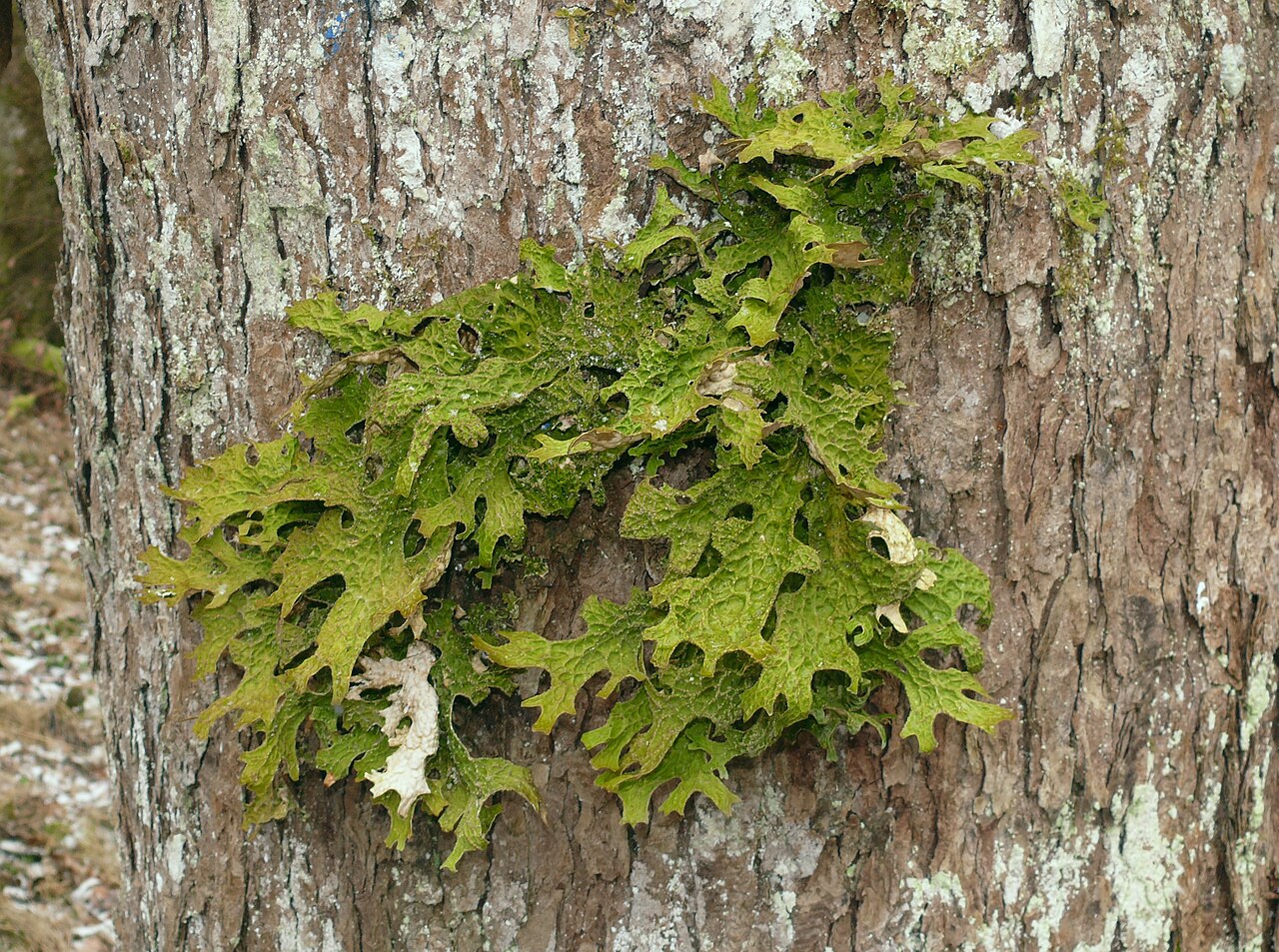
Meet the Lungwort Lichen
Fact block — copy it for your StoryMap
Lungwort lichen is not a plant or an animal. It is a team. A lichen is a fungus living together with tiny green algae and even tinier bacteria, all sharing one body. This lichen is leafy and bumpy, with ridges and dips on top. People named it lungwort because its surface looks a little like the inside of a lung. When it gets soaked with rain it turns bright green. When it dries out it fades to tan, brown, or gray.
Lungwort lichen is a remarkable partnership rather than a single living thing. A lichen forms when a fungus teams up with photosynthetic partners, and lungwort actually has three: a fungus, green algae, and a cyanobacterium (a kind of bacteria that makes food from sunlight). Scientists call this kind of three-way teamwork a symbiosis. The leafy, leathery body is covered in ridges and depressions, which is why it earned the name lungwort, after lung tissue. It shifts from bright green when moist to brownish and papery when dry. A single lichen usually spreads about 5 to 15 centimeters across.
Where It Lives
Fact block — copy it for your StoryMap
Lungwort lichen loves damp, rainy places, which makes the Pacific Northwest a perfect home. In rainforests like the Hoh, it grows on tree trunks, high up in the moist branches of the canopy, on shrubs, and sometimes on mossy rocks. Look for it in older forests, especially in sheltered valleys and near streams where the air stays cool and wet. It is the most common lichen of its kind in North America.
This lichen thrives in damp habitats with heavy rainfall, especially near the coast, so the soggy forests of the Pacific Northwest suit it well. Around places like Olympic National Park you can find it growing on tree trunks, up in humid tree canopies, on shrubs, and even on mossy rocks. It favors old-growth forests, particularly sheltered, narrow valleys and the riparian zones along streams, where shade keeps things cool and moist. Of the several related Lobaria lichens in the Pacific Northwest, lungwort is the most widespread, and it is the most common species of its group across North America.
Its Job in the Forest
Fact block — copy it for your StoryMap
Lungwort lichen has two important jobs. First, its bacteria pull nitrogen, a nutrient living things need to grow, right out of the air and turn it into a form that other plants and animals can use. Second, it is an air-quality indicator. Because it is easily harmed by dirty air, a healthy patch of lungwort is a clue that the forest air is clean. Small creatures like slugs and snails nibble on it too.
Lungwort lichen is a quiet helper in the rainforest. Its cyanobacteria can fix nitrogen, meaning they capture nitrogen gas from the air and turn it into a nutrient that the lichen, plants, and animals can use to grow. It also works as an air-quality indicator: lungwort is sensitive to air pollution, and it is especially hurt by acid rain, which lowers its ability to fix nitrogen. So when scientists find it growing well, the air is likely clean. Plant-eating creatures such as lichen-feeding slugs and snails graze on it, though the lichen makes defensive chemicals to fight back. In many lowland areas it has become endangered, often from pollution and the loss of older forests, which is why protecting cool, shady, mature woods matters.
Fast Facts
Fact block — copy it for your StoryMap
- Scientific name: Lobaria pulmonaria
- What it is: a lichen, a team of fungus, green algae, and cyanobacteria
- Color trick: bright green when wet, tan or brown when dry
- Special skill: pulls nitrogen from the air for other living things
- Clean-air clue: sensitive to pollution, so it signals healthy air
- Best home: damp old-growth forests, on trunks, canopies, and mossy rocks
Where these facts come from
National Park Service · Wikipedia · iNaturalist — real photos & sightings