Wild Files · Species File No. 22 · Fern
Licorice Fern
Polypodium glycyrrhiza
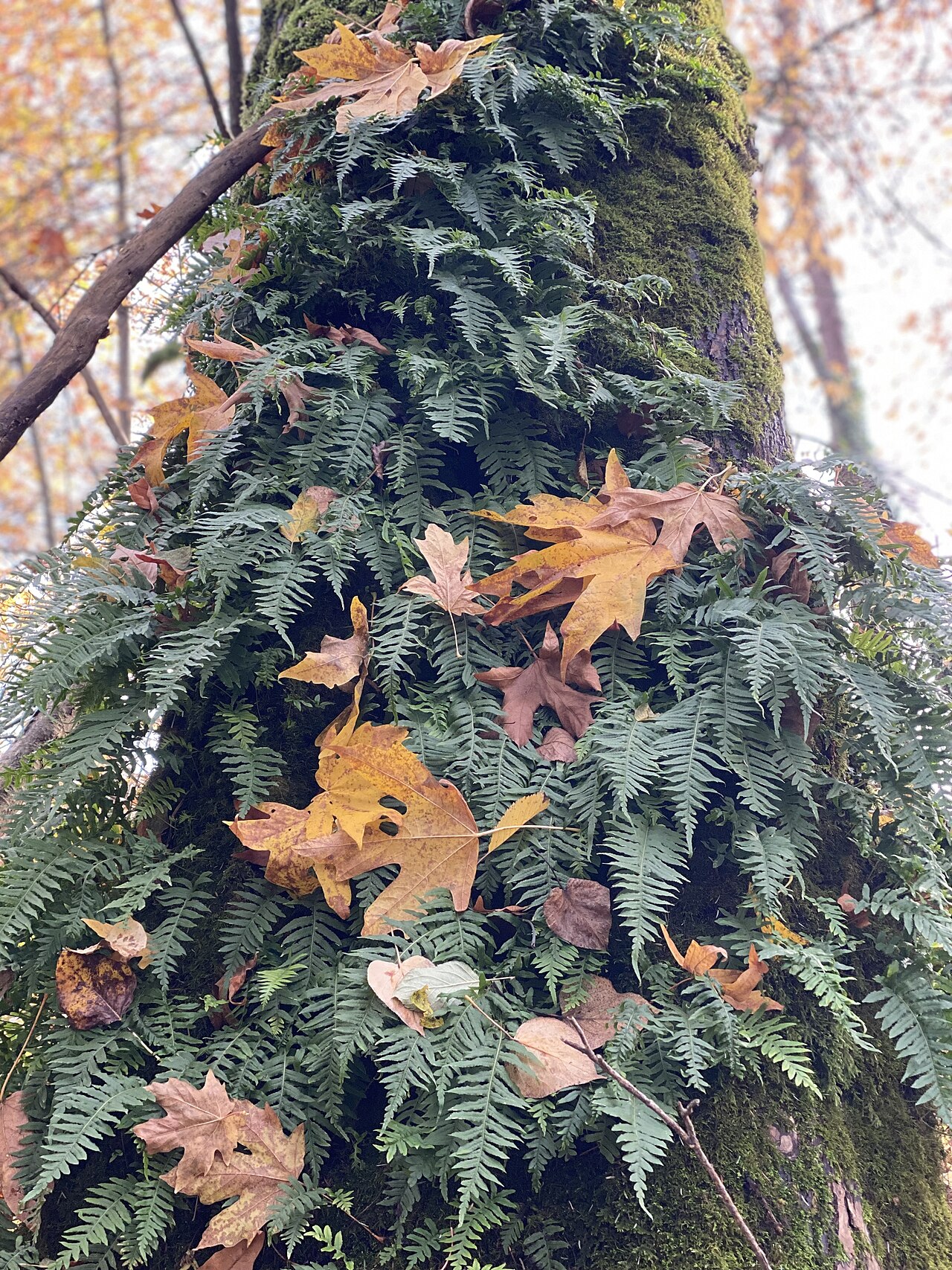
Meet the Licorice Fern
Fact block — copy it for your StoryMap
The licorice fern has a sweet secret. Its rhizome (the thick, creeping stem it grows from) tastes like licorice candy. People long ago chewed it just for the flavor. The sweetness comes from a natural substance called polypodoside, which is much sweeter than sugar water. Above the rhizome grow single leaves, called fronds, that are shaped like triangles with finely toothed edges. Each frond can be more than a foot long.
The licorice fern earns its name from a surprising place: its rhizome, the thick, creeping underground stem that new leaves sprout from. Chew a bit and it tastes sweet, like licorice. Scientists think that flavor comes from a compound called polypodoside, which can taste roughly 600 times sweeter than a weak sugar-water solution. From the reddish-brown rhizome rise single fronds, scattered one by one. Each frond is triangular, once-divided into pointed leaflets with finely toothed margins, and usually at least a foot long, sometimes more than two feet. On the underside, two rows of sori hold the spores the fern uses to reproduce.
Where It Lives
Fact block — copy it for your StoryMap
Look up when you walk through the Hoh Rain Forest. The licorice fern is an epiphyte, which means it grows on top of other plants instead of in the soil. You can spot it on mossy tree trunks, on logs, and on wet rocks. It loves the big-leaf maple tree most of all. This fern lives in very wet, low places, below about 600 meters (2,000 feet) of elevation, in a narrow strip near the coast that stretches from Alaska down to California.
In the Hoh Rain Forest, some of the best fern-spotting is overhead. The licorice fern is often an epiphyte, a plant that perches on another plant rather than rooting in the ground. You will find it carpeting moss-covered tree trunks, draping over logs, and clinging to wet rocks in very damp places. It is especially associated with the bigleaf maple, whose mossy bark makes a perfect cushion. The fern keeps to lowlands below about 600 meters (2,000 feet), in a narrow near-coastal strip running from southern Alaska and the Yukon through British Columbia, Washington, Oregon, and California, with one separate population in Idaho.
Its Role in the Rainforest
Fact block — copy it for your StoryMap
The licorice fern has a clever trick. While many plants rest in winter, this fern takes advantage of the mild, wet winters to keep making food from sunlight. That means it stays green when much of the forest is bare. It is also mycorrhizal, which means its roots team up with tiny threads of fungi in the soil and moss. For people, the rhizome has long been more than a snack. Many Indigenous groups chewed it for its flavor and used it as a medicine for colds and sore throats.
The licorice fern has an unusual schedule. It takes advantage of the mild, wet winters to photosynthesize, making food from sunlight during the very season when most temperate plants are dormant. That gives the rain forest a splash of green when much of the canopy has thinned, and it links the fern's growth to the soggy weather the Hoh is famous for. The fern is also mycorrhizal: its roots form partnerships with the threadlike hyphae of fungi, sharing resources beneath the moss. People have long valued it too. Indigenous nations including the Squamish, Shishalh, Comox, Nuxalk, Haida, and Kwakwaka'wakw chewed the sweet rhizomes for flavor and used them as a remedy for colds and sore throats.
Fast Facts
Fact block — copy it for your StoryMap
- Scientific name: Polypodium glycyrrhiza
- Type: A fern that often grows on mossy tree trunks, logs, and rocks (an epiphyte)
- Sweet secret: Its rhizome tastes like licorice, thanks to a compound called polypodoside
- Favorite host: Especially associated with the bigleaf maple
- Where it grows: A near-coastal strip from southern Alaska to California, in lowlands below 600 meters (2,000 feet)
- Winter grower: Photosynthesizes during the mild, wet winters when many plants are dormant
Where these facts come from
U.S. Fish & Wildlife Service · Wikipedia · iNaturalist — real photos & sightings