Wild Files · Species File No. 06 · Mammal
Cougar
Puma concolor
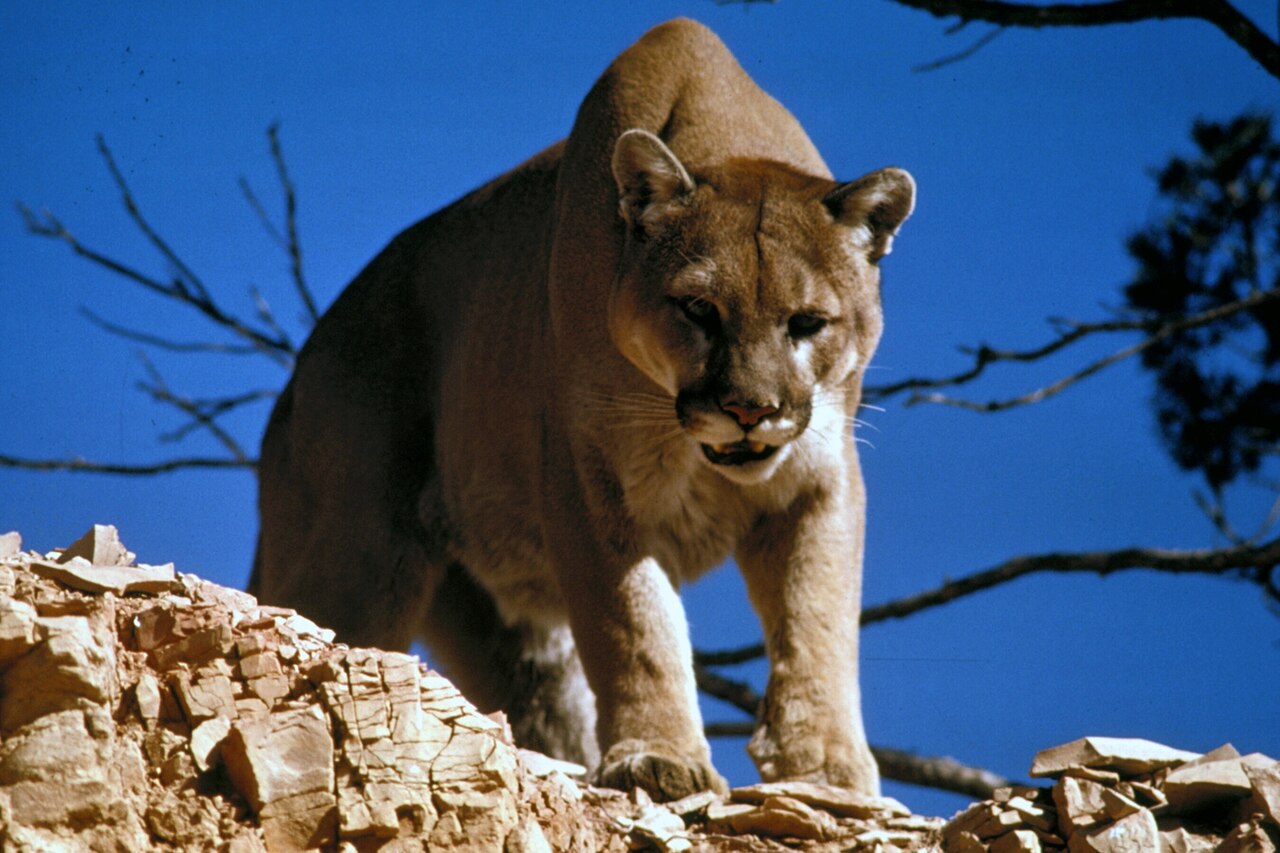
Meet the Cougar
Fact block — copy it for your StoryMap
The cougar is a big wild cat with a plain tawny coat and a very long tail. People also call it the mountain lion. It is one of the largest cats in North America. A cougar is an apex predator, which means it sits at the top of the food chain. Other animals do not hunt a grown cougar. This cat has so many names that it holds a world record for it. You might hear it called puma, panther, or catamount too.
The cougar, also known as the mountain lion, is one of the largest cats in North America and a top predator. Its coat is a plain tawny color that can range from silvery-grey to reddish, and it has a long tail. Adult males can stretch about 7 to 8 feet from nose to tail tip. The cougar is an apex predator, meaning no other animal hunts a healthy adult. Curiously, it holds the Guinness record for the animal with the most names, with over 40 in English alone. These include puma, panther, and catamount.
Where It Lives
Fact block — copy it for your StoryMap
Cougars need places with lots of cover to hide and hunt. They like rocky areas and forests with trees and brush where they can sneak up on their meals. The cougar has the biggest range of any wild land animal in the Americas. That means you could find one almost anywhere from Canada all the way down to South America. Think of the Hoh Rain Forest in Olympic National Park. Its thick trees and underbrush give a cougar perfect cover to stay hidden.
Cougars roam the most extensive range of any wild land animal in the Americas. That range stretches from the Yukon in Canada all the way to the southern Andes in Chile. They live in many places, including every forest type, deserts, and open country, sometimes as high as 19,000 feet. What a cougar really needs is cover. It prefers rocky breaks and forested areas with trees and brush, which give it places to hide while stalking prey. A dense, shadowy forest like the Hoh Rain Forest offers exactly the kind of thick cover this ambush predator depends on.
Its Role in the Food Web
Fact block — copy it for your StoryMap
The cougar is a hunter that eats meat. It mostly hunts large animals like deer and elk, plus smaller ones like marmots. A cougar is an ambush predator, which means it hides and waits. Then it leaps onto the back of its prey. By keeping deer and elk herds in check, the cougar helps balance the whole forest. Scientists call it a keystone species because so many other animals depend on it. In fact, cougars connect with hundreds of other species as both hunter and food source.
Cougars are hypercarnivores, meaning meat makes up almost their entire diet. They prefer large mammals such as mule deer, white-tailed deer, and elk. They will also take smaller prey like marmots and rodents. As an ambush predator, a cougar stalks quietly through brush and trees, then delivers a powerful leap onto its prey's back. By controlling herds of deer and elk, cougars shape and structure the whole ecosystem. Scientists consider them a keystone species, an animal so important that the food web would change without it. One study found cougars interact with 485 other species as both predator and food source. Their hunting ripples through the entire forest community.
Fast Facts
Fact block — copy it for your StoryMap
- Scientific name: Puma concolor
- Other names: mountain lion, puma, panther, catamount (over 40 names in English)
- Size: males about 7 to 8 feet from nose to tail tip
- Diet: mostly large mammals like deer and elk, plus smaller animals
- Role: apex predator and keystone species
- Lifespan: about 8 to 13 years in the wild
Where these facts come from
National Park Service · Wikipedia · iNaturalist — real photos & sightings