Wild Files · Species File No. 31 · Fish
Chinook Salmon
Oncorhynchus tshawytscha
Meet the Chinook Salmon
Fact block — copy it for your StoryMap
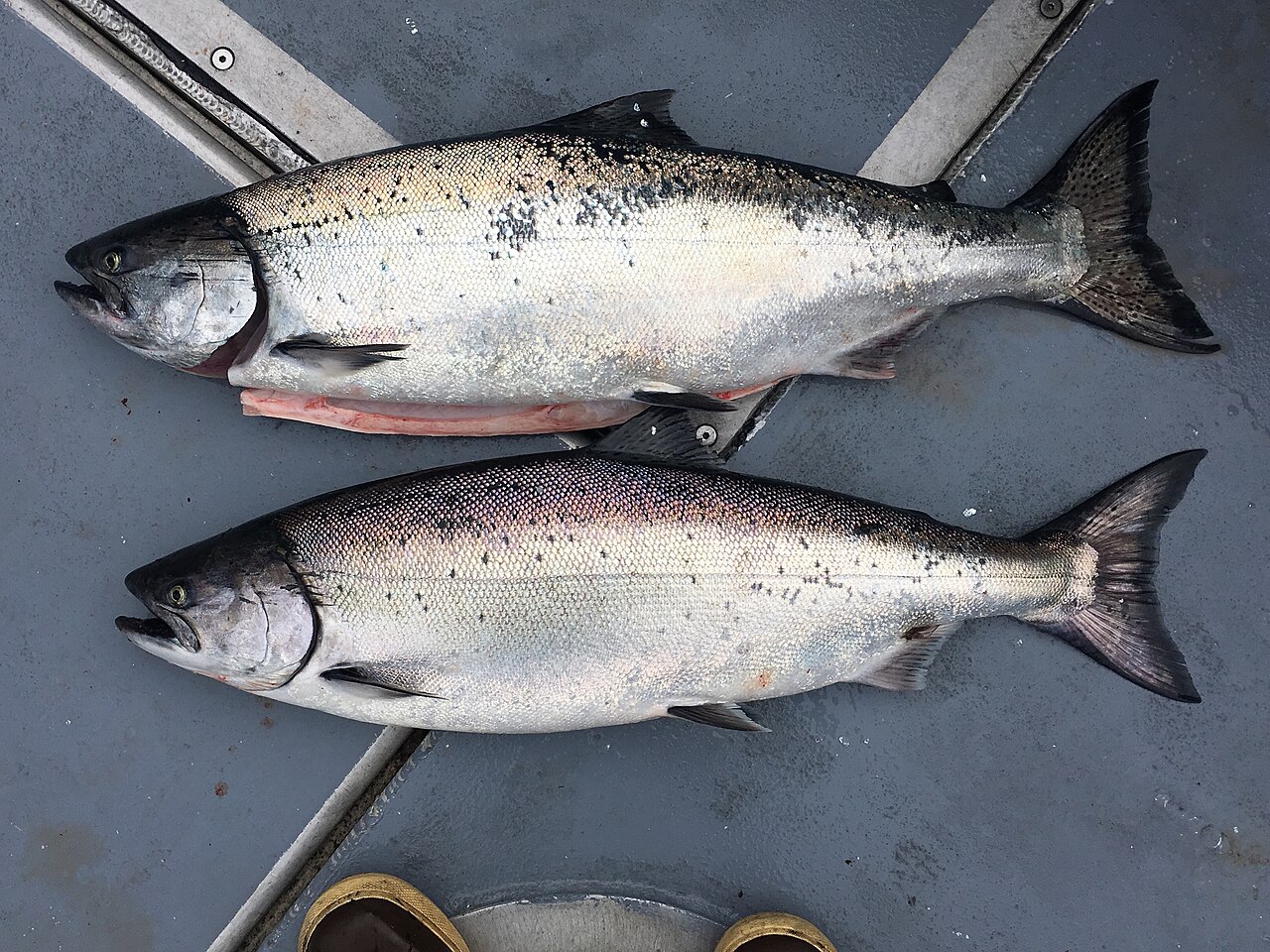
The Chinook salmon is the biggest kind of Pacific salmon. Most weigh between 15 and 50 pounds, but a few have reached 100 pounds. You can spot one by its dark, spotted back and the black line along its gums, which it keeps in both salt water and fresh water. Chinook are anadromous, which means they hatch in rivers, swim out to the ocean to grow up, and then return to rivers to lay their eggs.
The Chinook salmon is the largest and most valuable species of Pacific salmon. Adults usually weigh between 15 and 50 pounds, though Olympic's Elwha River once produced fish near 100 pounds. They are anadromous, meaning they live in both saltwater and freshwater during their lives. Chinook can spend up to seven years in the ocean before returning home. You can recognize one by the black spots scattered across its silvery back and tail, plus a distinctive black gum line that stays dark whether the fish is in the sea or a stream.
Where It Lives in the Hoh
Fact block — copy it for your StoryMap
Chinook salmon live part of their lives in the rivers of Olympic National Park and part out in the Pacific Ocean. Around the Hoh Rain Forest, they swim up the Hoh River to build their nests. A spawning nest is where the female lays her eggs in the gravel, and these nests can be up to 10 feet across. The Hoh River has both spring and summer runs of Chinook, and those fish stay in the river all summer long.
Chinook split their lives between coastal rivers and the open Pacific. In the Hoh Rain Forest, they travel up the Hoh River to spawn, which means to lay eggs in gravel nests called redds that can stretch up to 10 feet in diameter. The Hoh, Queets, and Quinault Rivers host small spring runs, and the Hoh, Queets, and Quillayute Rivers host summer runs, with those summer fish remaining in the rivers throughout the season. Most Chinook in the park spawn in the fall.
Its Job in the Food Web
Fact block — copy it for your StoryMap
Chinook salmon help feed the whole rainforest. When young, they eat tiny crustaceans and insects, and when older they mostly eat other fish. After the adults swim upriver and lay their eggs, many die, and their leftover bodies become food packed with nutrients for other meat-eating animals near the river. So even after a salmon's life ends, it keeps the rainforest community fed and healthy.
Chinook are a key link in the rainforest food web. As juveniles they eat amphipods, other crustaceans, and insects; as adults they feed mostly on other fish. When the runs finish spawning, the leftover carcasses provide essential nutrients for other carnivorous members of the wildlife community along the rivers. Some Chinook populations, like those in Puget Sound, are listed as threatened, but the runs in west coast valley rivers are stable. After dams were removed on the Elwha River, Chinook quickly recolonized stretches of river far upstream, showing how the species can recover when given open water.
Fast Facts
Fact block — copy it for your StoryMap
- Scientific name: Oncorhynchus tshawytscha
- Size: The largest Pacific salmon, usually 15 to 50 pounds
- Lifestyle: Anadromous, living in both ocean and rivers
- Spawning nests: Gravel redds up to 10 feet across
- Local runs: Spring and summer Chinook spawn in the Hoh River
- Status: Puget Sound Chinook are threatened, but west coast valley river runs are stable
Where these facts come from
Olympic National Park (NPS) · Wikipedia · iNaturalist — real photos & sightings