Wild Files · Species File No. 32 · Fish
Bull Trout
Salvelinus confluentus
Federally threatened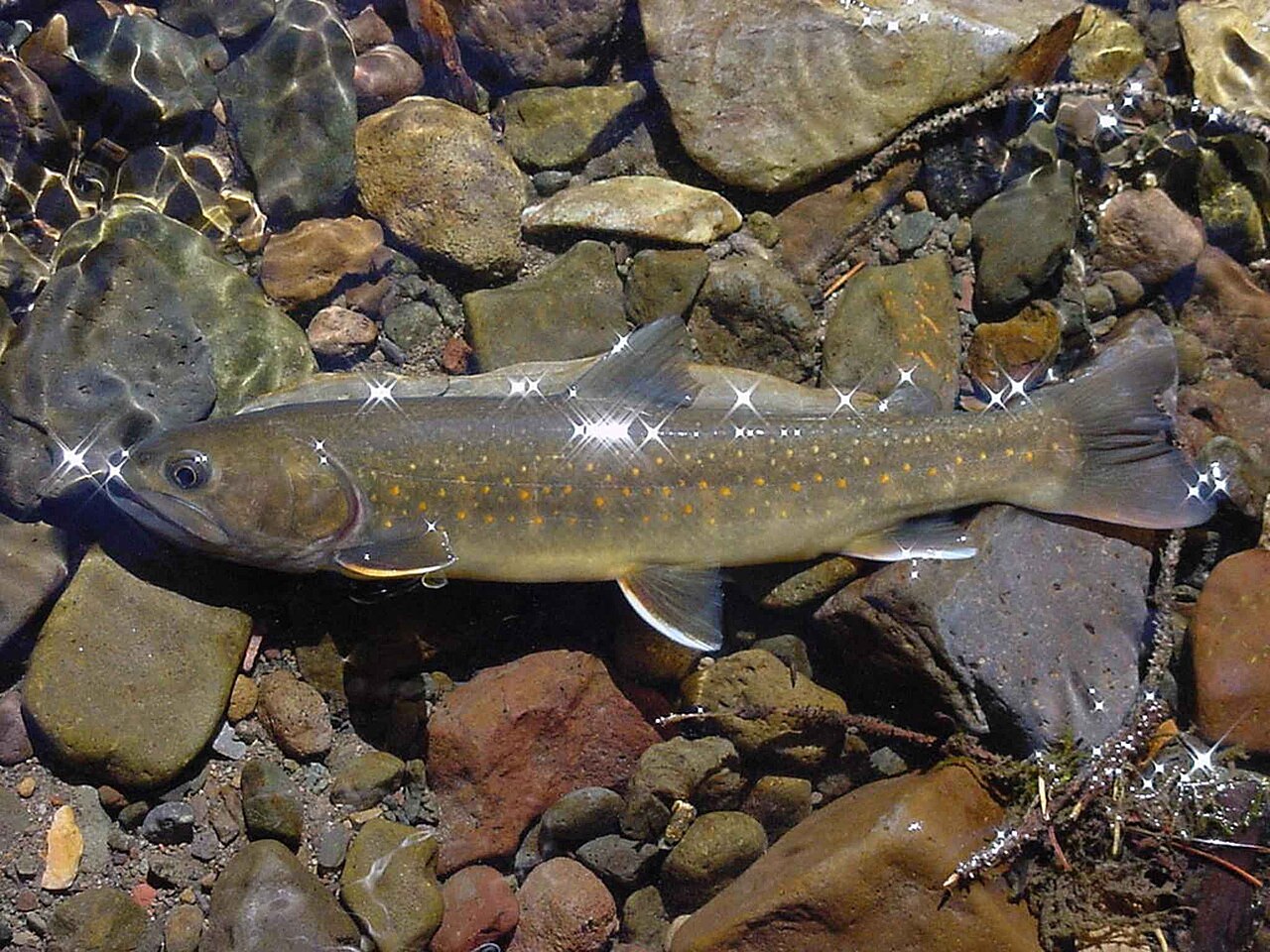
Meet the Bull Trout
Fact block — copy it for your StoryMap
The bull trout is a kind of fish called a char, a close cousin of trout and salmon. It has an extra-big head and mouth, and its back is dotted with pale yellow, orange, or salmon-colored spots instead of red ones. Look at its lower fins and you may spot bright white front edges. Bull trout can grow large. The biggest ones reach about 41 inches long, though many fish that stay in one small stream stay much smaller.
The bull trout is a char, a member of the salmon family that looks a lot like a trout but is its own kind of fish. You can recognize it by its unusually large head and mouth, the pale yellow, orange, or salmon-colored spots scattered across its back, and the crisp white leading edges on its lower fins. Bull trout live two very different lives. Some are migratory, roaming through big rivers, lakes, and even the ocean and growing up to about 41 inches long. Others are resident, spending their whole lives in a single cold stream and staying much smaller.
Where It Lives
Fact block — copy it for your StoryMap
Bull trout need water that is cold and clean. They like deep pools in cold lakes and large rivers, plus high, chilly mountain streams near the start of a river. In Washington, that includes the cold rivers and streams of the Olympic Peninsula, the same kind of country as the Hoh Rain Forest. The water usually has to stay below about 55 degrees Fahrenheit. They also need clean gravel on the stream bottom and deep, shady spots to hide.
Bull trout are famous for being picky about where they live, and the Olympic Peninsula in Washington, home of the Hoh Rain Forest, has the cold, clean rivers and streams they depend on. They gather in the deep pools of cold lakes and large rivers and in high, frigid mountain headwaters near a river's source. The water generally needs to stay below about 55 degrees Fahrenheit, which is why scientists sometimes call bull trout an indicator species: where they thrive, the water is usually cold and healthy. They also rely on clean gravel beds, deep pools, and plenty of cover like sunken logs and undercut banks to rest and hide.
A Fish That Needs Our Help
Fact block — copy it for your StoryMap
In the lower 48 states, the bull trout is listed as threatened under the U.S. Endangered Species Act. That means it could be in danger of disappearing if we are not careful. Building roads and cutting down forests can warm and muddy the water they need. Dams can block the long journeys they swim to lay their eggs. Non-native brook trout can crossbreed with them too. Protecting cold, clean rivers gives these fish a better chance to recover.
Across the lower 48 states, the bull trout is listed as threatened under the U.S. Endangered Species Act, meaning it could slide toward extinction without protection. Several problems put it at risk. Road building and logging can warm streams and fill them with sediment, ruining the cold, clean water and gravel bull trout need. Dams can block their migrations, cutting off the upstream gravel beds where they were born and must return to spawn. They can also hybridize, or crossbreed, with non-native brook trout, which weakens the population. Because these fish demand such pristine conditions, keeping rivers cold, connected, and clean is the heart of helping them recover.
Fast Facts
Fact block — copy it for your StoryMap
- Type: A char, a cold-water cousin of trout and salmon
- Scientific name: Salvelinus confluentus
- Size: Up to about 41 inches long in the largest, far-traveling fish
- Cold-water rule: Usually needs water below about 55°F
- Spots: Yellow, orange, or salmon-colored, with white edges on its lower fins
- Status: Federally threatened in the lower 48 states
Where these facts come from
U.S. Fish & Wildlife Service · Wikipedia · iNaturalist — real photos & sightings