Wild Files · Species File No. 07 · Mammal
Bobcat
Lynx rufus
Meet the Bobcat
Fact block — copy it for your StoryMap
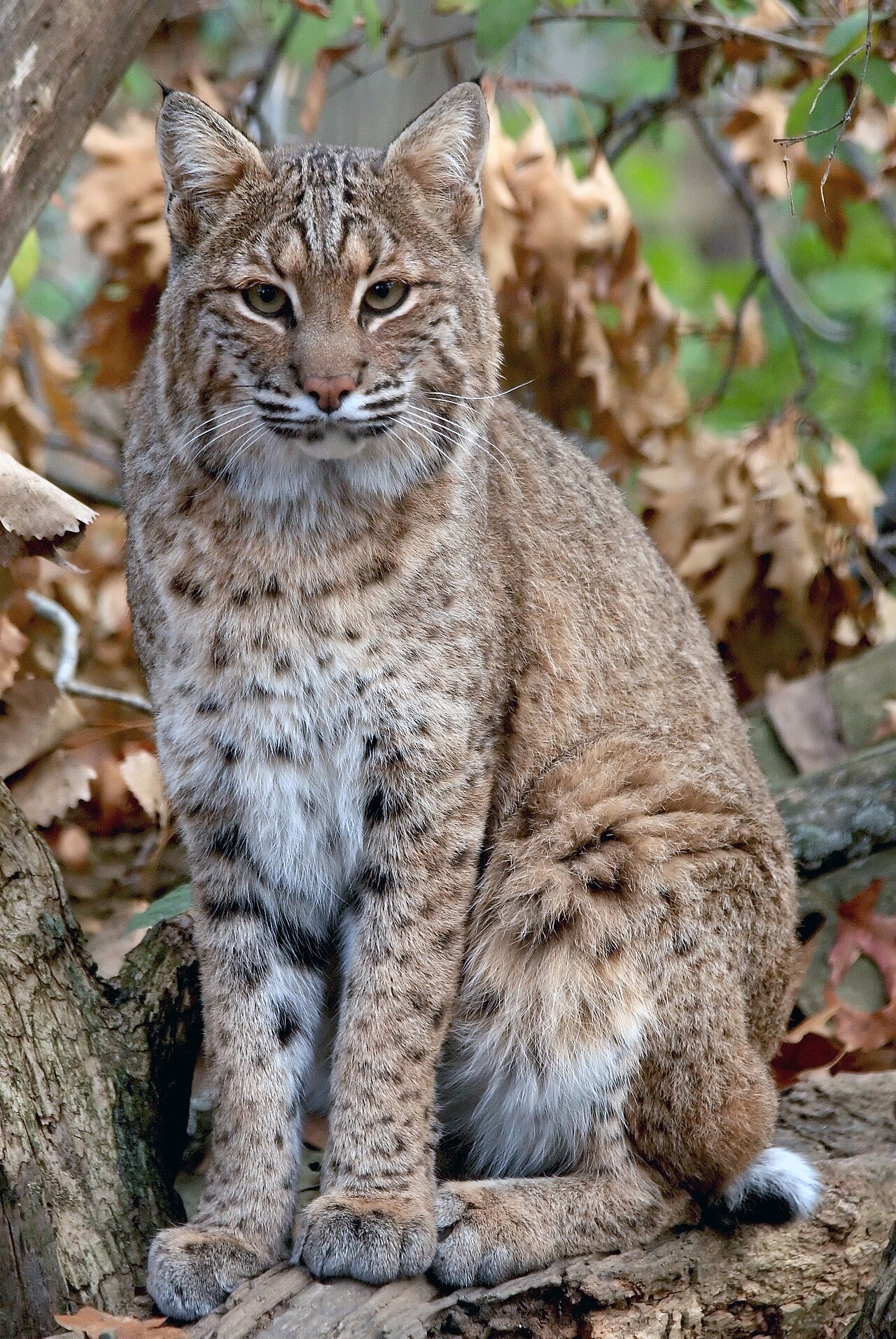
The bobcat is a medium-sized wild cat. Its name comes from its tail. The tail is short and stubby, like it got bobbed, or cut short. A bobcat has a tan or grayish-brown coat with dark spots that help it hide. Look for the black tufts of fur on its pointed ears and the black bars on its front legs. Its eyes are yellow and its nose is pinkish-red.
The bobcat (Lynx rufus) is a mid-size wild cat, on average the smallest of the four species of lynx. Adult males weigh about 21 pounds and females about 15 pounds, and they stand roughly 12 to 24 inches tall at the shoulder. The cat gets its name from its short, black-tipped tail, which looks like it was bobbed, or trimmed short. Its tan to grayish-brown coat is patterned with spots that work as camouflage. Other clues are the black tufts on its pointed ears, black bars on its forelegs, yellow eyes with slit pupils, and a pinkish-red nose.
Where It Lives
Fact block — copy it for your StoryMap
Bobcats live across most of North America, and Washington State is part of their home. They are found in many places, but they like woodlands best, including forests of evergreen trees like the ones in the Hoh Rain Forest. They also live along forest edges and in swampy, wet areas. A bobcat does not need deep forest to survive. It can live where the woods meet open land, which is one reason it does well in so many spots.
Bobcats range across most of North America, from southern Canada through nearly all of the lower 48 United States. That means the forests of Washington's Olympic Peninsula fall within their territory. They are adaptable and live in many habitats: wooded areas, semidesert, swampland, the edges of forests, and even the edges of towns. They prefer woodlands, whether deciduous, coniferous, or mixed, which fits the coniferous rainforest around the Hoh. Importantly, a bobcat does not depend on deep, unbroken forest. It often thrives where trees meet meadows or clearings.
Its Role in the Food Web
Fact block — copy it for your StoryMap
The bobcat is a predator, an animal that hunts other animals for food. It is also solitary, which means it usually lives and hunts alone. Bobcats mostly eat smaller mammals like rabbits and hares. They hunt by stalking, sneaking close, then making a short chase or pounce. The number of bobcats living in an area depends mostly on how many prey animals are around. Bigger predators can hunt the bobcat too. Cougars, wolves, and coyotes are all able to kill an adult bobcat.
The bobcat is a solitary, mid-size predator, meaning it lives and hunts mostly alone and feeds on other animals. Its favorite prey are mammals weighing roughly 1.5 to 12.5 pounds, especially rabbits and hares such as the snowshoe hare in northern areas, but it also takes small rodents, birds, and occasionally young deer. It hunts by stalking prey, then ambushing with a short chase or pounce. The bobcat is tied tightly to its food supply: its population depends primarily on the population of its prey. The bobcat is not at the top, though. Cougars and gray wolves can kill adults, coyotes prey on both adults and kittens, and great horned owls, eagles, foxes, and bears hunt the young.
Fast Facts
Fact block — copy it for your StoryMap
- Scientific name: Lynx rufus
- Size: Males average about 21 pounds; females about 15 pounds
- Tail: Short and black-tipped, which gives the "bobbed" cat its name
- Favorite food: Rabbits and hares, plus small rodents and birds
- Lifestyle: Solitary and territorial, marking its range with scent and claw marks
- Conservation status: Least Concern on the IUCN Red List, thanks to its wide range and large population
Where these facts come from
U.S. Fish & Wildlife Service · Wikipedia · iNaturalist — real photos & sightings