Wild Files · Species File No. 03 · Mammal
Black Bear
Ursus americanus
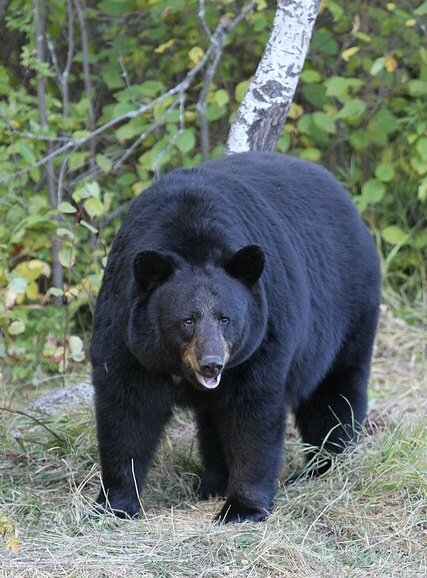
Meet the Black Bear
Fact block — copy it for your StoryMap
The black bear is the most common bear in North America. Here is a surprise: not all black bears are black. Their fur can be black, cinnamon, blonde, or even white. An adult stands about three feet tall at the shoulder and can weigh anywhere from 100 to 600 pounds. Its best tool is its nose — a black bear's sense of smell is about seven times more sensitive than a dog's. That amazing nose leads it to berries, nuts, and other food hidden all over the forest.
The American black bear (Ursus americanus) is the most common and widely distributed bear species in North America. Despite the name, its coat ranges from jet black to cinnamon, blonde, and even white. Adults stand about three feet at the shoulder — five to seven feet when they rear up on their hind legs — and weigh from 100 to 600 pounds depending on age, sex, and season.
Black bears are surprisingly athletic. They are strong swimmers, can run 25 to 30 miles per hour, and climb trees skillfully using curved claws. Their keenest sense is smell, roughly seven times more sensitive than a domestic dog's, and it guides nearly everything they do.
Where It Lives
Fact block — copy it for your StoryMap
Black bears live in forests all across North America, from beaches to high mountain slopes. Along the Pacific coast they live in forests of Sitka spruce and hemlock — the same giant trees that grow in the Hoh Rain Forest. A black bear roams the forest floor, sniffing out berries and plants. Bears near rivers also catch salmon. If a bear feels unsafe, it can scramble straight up a tree using its curved claws.
Black bears are habitat generalists, found everywhere from forest to beach to alpine zone across North America. On the Pacific coast they live among Sitka spruce and hemlock — the very trees that dominate the Hoh Rain Forest in Olympic National Park. A bear travels widely across the forest floor, following its nose through the seasons: fresh vegetation, then summer berries, and salmon for bears near coastal rivers. Black bears are largely crepuscular, meaning they forage most actively around dawn and dusk.
In winter, a black bear retreats to a den and hibernates, in some regions for up to six months without eating, drinking, or expelling waste. Its heart rate can drop from about 40–50 beats per minute to just 8.
Gardener of the Forest
Fact block — copy it for your StoryMap
A black bear is an omnivore — an animal that eats both plants and meat. Up to 85 percent of its food is plants: berries, nuts, and fresh greens. It also eats insects, and bears near rivers catch salmon. Black bears are doing well. Scientists list them as Least Concern, which means they are not in danger of dying out.
Black bears sit near the top of the rainforest food web, yet they eat mostly low on it: up to 85 percent of their diet is vegetation — berries, nuts, and fresh greens — plus insects such as ants and beetles, and salmon for bears near coastal streams.
Healthy adults have few natural predators, though cubs must watch for cougars, coyotes, and bobcats. The species is listed as Least Concern, with a population estimated at about twice that of all other bear species combined. The main risks come from humans — which is why park visitors store food carefully, so bears never learn to connect people with snacks and stay safely wild.
Fast Facts
Fact block — copy it for your StoryMap
- Scientific name: Ursus americanus
- Size: About 3 feet tall at the shoulder; 100 to 600 pounds
- Top speed: Can run 25 to 30 miles per hour
- Super sense: A nose about seven times more sensitive than a dog's
- Diet: Omnivore — up to 85% plants, including berries and nuts, plus insects and salmon
- Lifespan: About 15 to 25 years in the wild
Where these facts come from
National Park Service · Wikipedia · iNaturalist — real photos & sightings