Wild Files · Species File No. 18 · Tree
Bigleaf Maple
Acer macrophyllum
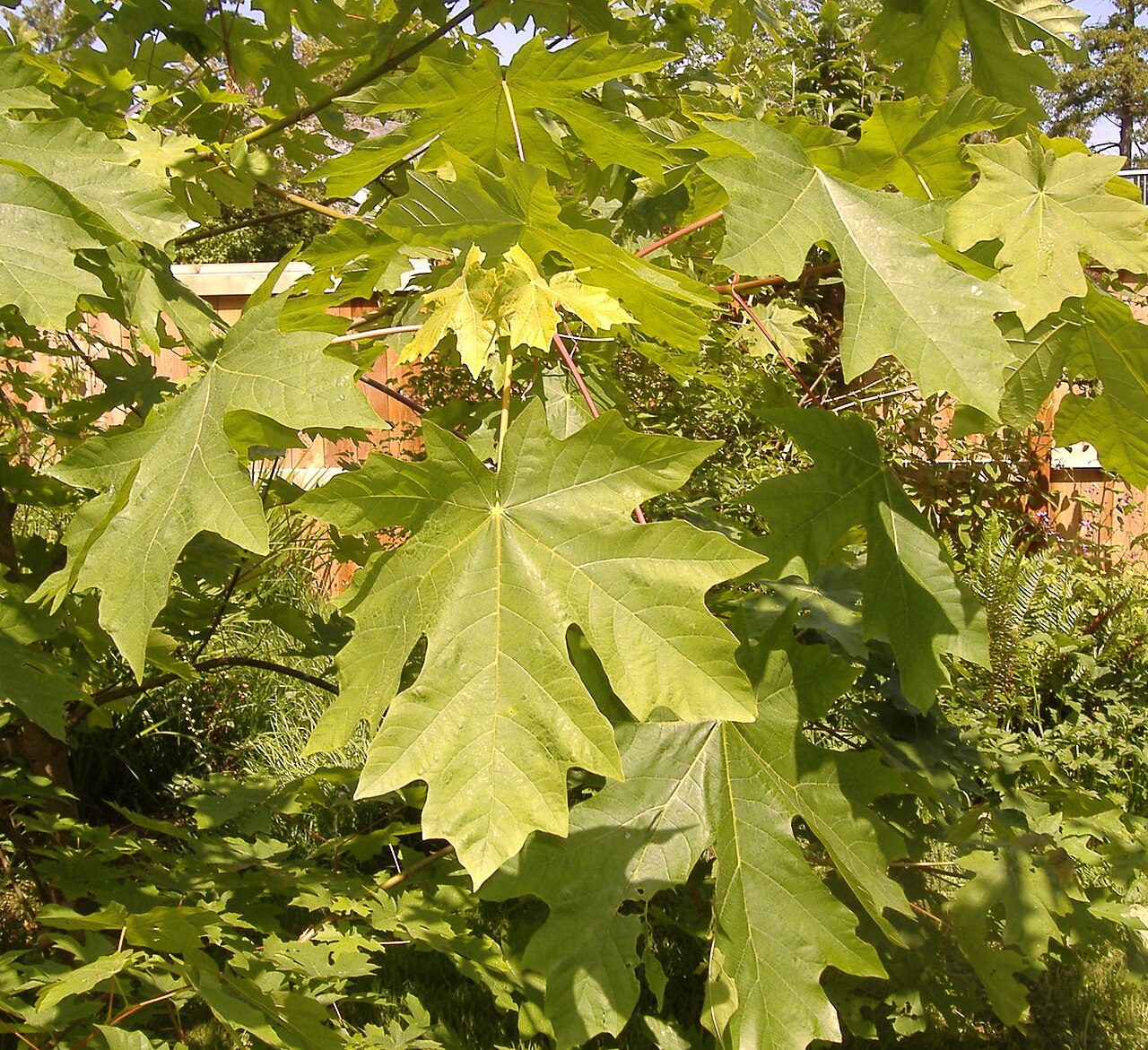
Meet the Bigleaf Maple
Fact block — copy it for your StoryMap
The bigleaf maple is a tree with the largest leaves of any maple. A single leaf can be 6 to 12 inches across, about the size of a dinner plate, and some grow even bigger. It is the largest maple in North America. Most of these trees grow about 50 feet tall, but some reach much higher. In spring it grows tiny greenish-yellow flowers in hanging bunches.
The bigleaf maple earns its name. Its leaves are the largest of any maple, usually 6 to 12 inches across, and a few have stretched past 24 inches. It is the biggest maple species in North America, often growing around 50 feet tall and sometimes much taller. Each spring, hanging clusters of greenish-yellow flowers appear. These turn into paired winged seeds called samaras, which spin like tiny helicopter blades as they fall. The leaf stems hold a milky sap inside.
Where It Lives
Fact block — copy it for your StoryMap
Bigleaf maples grow along the Pacific coast, from Alaska all the way down to southern California. They like wet places near water, such as streams and riverbanks. In rainy forests like Olympic National Park, the trees get a green coat. Moss and a plant called licorice fern grow right on the bark. These plants that live on other plants are called epiphytes. They make the trunk look fuzzy and green.
You can find bigleaf maples up and down the Pacific coast, from Alaska to southern California. They prefer moist spots near water, like streams, rivers, and damp forest canyons. In very wet places such as Olympic National Park and the surrounding rain forest, their trunks become armored in moss and ferns. These plants that perch on other plants are called epiphytes, and they include mosses and licorice fern. In Pacific Northwest rain forests, one bigleaf maple can support around a ton of mosses, more than any other tree in the region.
Its Job in the Forest
Fact block — copy it for your StoryMap
The bigleaf maple feeds many forest animals. Deer, elk, and mountain beavers browse the tree, which means they nibble its leaves and shoots. Squirrels and birds like finches and grosbeaks eat the winged seeds, especially in winter when other food is hard to find. Birds also nest in the big branches. Without this tree, many animals would lose a food source and a safe place to live.
The bigleaf maple is a busy part of the forest food web. Deer, elk, and mountain beavers browse it, eating the leaves and young shoots. Douglas squirrels, flying squirrels, finches, and evening grosbeaks feed on the winged seeds, which matters most in winter when food is scarce. Many birds nest in the tree's large branches. If bigleaf maples disappeared, these animals would lose both meals and shelter, and the rain forest would be a quieter, less green place.
Fast Facts
Fact block — copy it for your StoryMap
- Scientific name: Acer macrophyllum
- Leaves: The largest of any maple, usually 6 to 12 inches across
- Height: Often about 50 feet tall, sometimes much taller
- Range: Pacific coast from Alaska to southern California
- Mossy trunks: One tree can hold around a ton of mosses
- Eaten by: Deer, elk, squirrels, and seed-eating birds
Where these facts come from
USDA Forest Service · Wikipedia · iNaturalist — real photos & sightings