Wild Files · Species File No. 29 · Mollusk
Pacific Banana Slug
Ariolimax columbianus
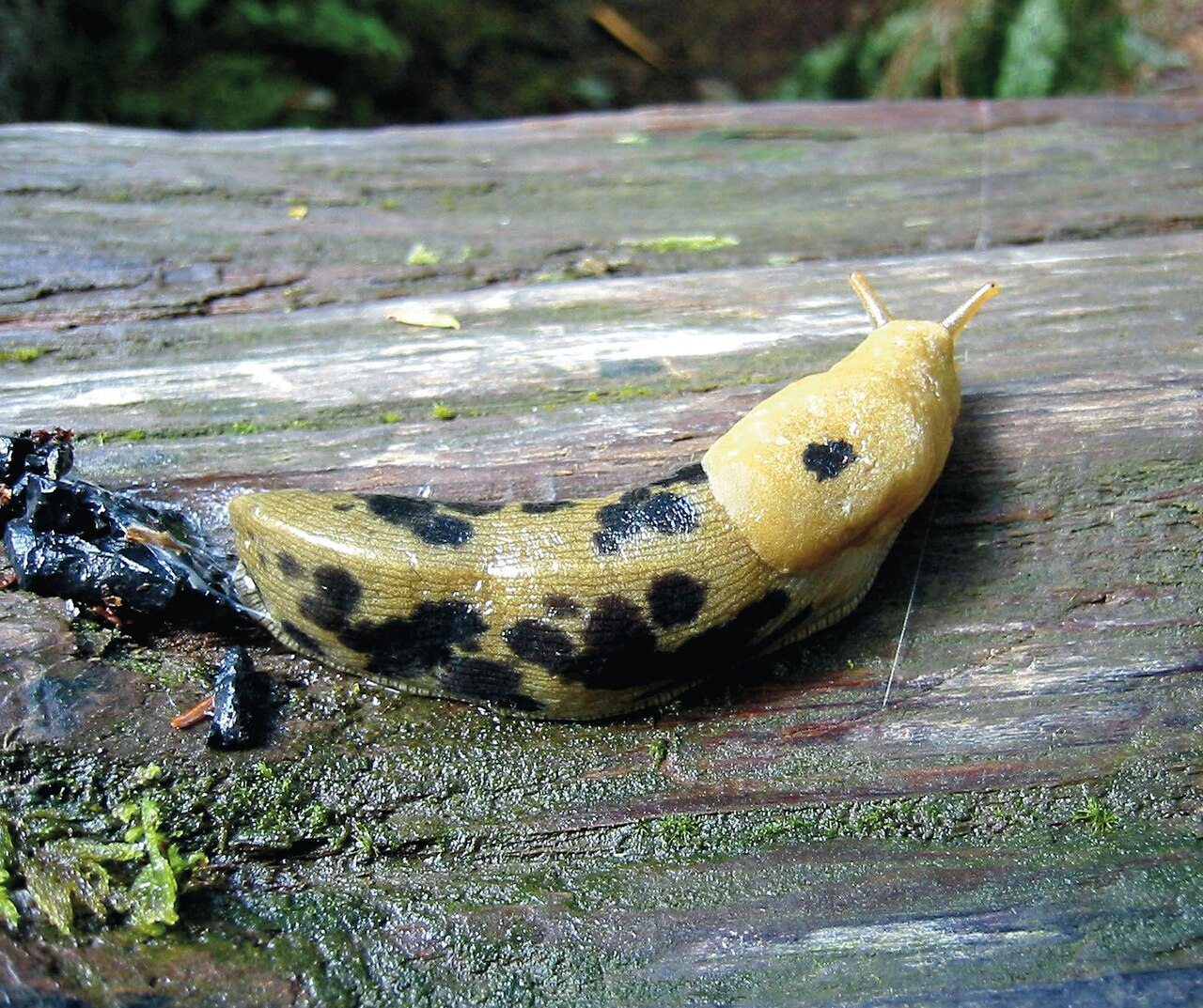
Meet the Pacific Banana Slug
Fact block — copy it for your StoryMap
The Pacific banana slug is a mollusk, which means it is a soft-bodied animal in the same big family as snails. It is a slug, not a frog or other amphibian. Many of these slugs are bright yellow with black spots, so they look a lot like a ripe banana. That is how they got their name. They can grow very long for a slug, up to about 9.8 inches (25 centimeters).
The Pacific banana slug (Ariolimax columbianus) is a gastropod mollusk, a soft-bodied relative of snails. It is a slug, not an amphibian. Its color is often bright yellow, but it can also be greenish, brown, tan, or white, often with black spots that sometimes cover the whole tail. That yellow, banana-like look is where its name comes from. Reaching up to 9.8 inches (25 centimeters) long, it is the second-largest land slug in the world. It even has a small breathing hole, called a pneumostome, on the side of its head.
Where It Lives
Fact block — copy it for your StoryMap
This slug lives in damp forests like the Hoh Rain Forest in Olympic National Park. It is endemic to the Pacific Northwest, which means it is found here and nowhere else in the world. Its home stretches along the coast from northern California all the way up to Alaska. You will most likely spot one in the moist, shady spots on the forest floor, gliding over wet leaves and logs.
The Pacific banana slug is endemic to the Pacific Northwest, meaning it lives in this region and nowhere else on Earth. Its range runs along the coast from northern California north to Alaska, which includes the rainy forests of Olympic National Park, such as the Hoh Rain Forest. Slugs need moisture to survive, so you will find them in the moist and damp areas of the forest floor rather than in dry, sunny meadows or up in the treetops. There, the cool shade and constant dampness give them exactly the wet conditions their soft bodies need.
Its Job in the Rainforest
Fact block — copy it for your StoryMap
The banana slug is a decomposer, an animal that breaks down dead stuff and turns it back into soil. It eats dead leaves, dead animal matter, and the occasional mushroom or young plant. As it eats, it helps spread seeds around the forest. The slug protects itself with slimy mucus that can numb a predator's mouth. Without decomposers like this slug, the forest floor would not recycle its food as well.
The Pacific banana slug is a key decomposer, an animal that breaks down dead plant and animal matter and recycles it into the soil. It also snacks on mushrooms and young seedlings, and it plays an important part in seed dispersion, spreading seeds as it moves through the forest. To defend itself, the slug constantly coats its body in slippery mucus that can numb a predator's mouth, making the slug a tricky meal. By turning dead material into rich soil and moving seeds around, this slug helps keep the rainforest's nutrients cycling and new plants growing.
Fast Facts
Fact block — copy it for your StoryMap
- Type: A slug, which is a soft-bodied mollusk (a relative of snails), not an amphibian.
- Scientific name: Ariolimax columbianus.
- Size: Up to about 9.8 inches (25 centimeters), the second-largest land slug in the world.
- Color: Often bright yellow like a banana, but also greenish, brown, tan, or white, often with black spots.
- Range: Endemic to the Pacific Northwest, from northern California to Alaska.
- Role: A decomposer that eats dead matter, helps spread seeds, and uses numbing mucus for defense.
Where these facts come from
National Park Service · Wikipedia · iNaturalist — real photos & sightings