Wild Files · Species File No. 10 · Bird
Bald Eagle
Haliaeetus leucocephalus
Meet the Bald Eagle
Fact block — copy it for your StoryMap
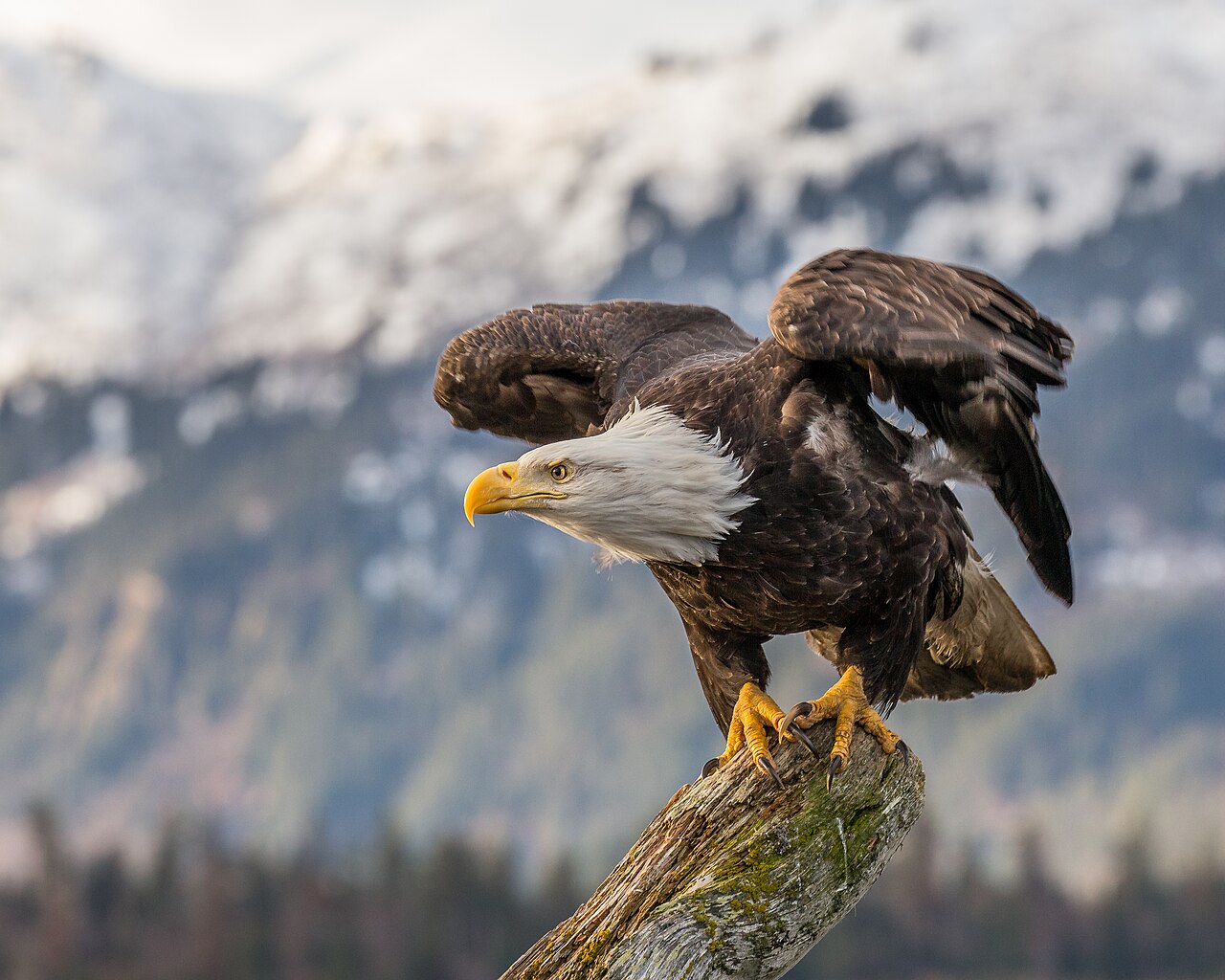
The bald eagle is a huge bird of prey, which means it hunts other animals for food. It is not really bald. It has a snow-white head and tail, a dark brown body, and a bright yellow beak and feet. Its wings can stretch wider than a grown-up is tall. From wingtip to wingtip, an eagle can spread almost 8 feet. Watch the sky over a river, and you might spot one gliding by.
The bald eagle is one of North America's largest raptors, a group of sharp-eyed hunting birds. Despite the name, it is not bald. Adults have a striking white head and tail, a dark brown body, and a hooked yellow beak with matching yellow feet and eyes. Their wingspan reaches about 1.8 to 2.3 meters, roughly 6 to 7.5 feet across. Females are usually around 25 percent larger than males. Young eagles look mostly brown all over and do not grow their famous white head until they are several years old, which is why the birds you spot may not match the picture in your head.
Where It Lives
Fact block — copy it for your StoryMap
Bald eagles need two things: open water full of fish, and tall old trees to nest in. The rivers and forests of the Pacific Northwest give them both. Eagles usually nest close to water, often within about 200 meters, so they can grab fish without flying far. They build giant nests high in big trees. The same pair may use one nest for years, adding sticks until it grows huge and heavy.
Bald eagles depend on large bodies of open water rich in fish, paired with tall, old trees for nesting. The Pacific Northwest offers exactly that: salmon-filled rivers winding through forests of towering trees, which is perfect eagle country. Eagles prefer old-growth trees over 20 meters tall and usually build within about 200 meters of water. Their nests are among the biggest of any bird, reaching up to 4 meters deep, 2.5 meters wide, and as heavy as a small car. A breeding pair often returns to the same nest year after year, adding new sticks each season, so the structure keeps growing larger and heavier over time.
Its Role in the Food Web
Fact block — copy it for your StoryMap
Fish is the eagle's favorite meal, especially salmon and trout. About half of what nesting eagles eat is fish. But eagles are also scavengers, which means they eat animals that are already dead. Along the river, they scavenge salmon, cleaning up the leftovers. Eagles will even steal fish from other birds like ospreys. As top hunters, they help keep the food web in balance. Without them, fewer dead fish would get cleaned up.
Bald eagles are both hunters and scavengers, and that double job makes them important to the ecosystem. Fish make up roughly 56 percent of a nesting eagle's diet, with salmon and trout being favorites in the Pacific Northwest. Eagles hunt live prey, but they also scavenge salmon along the river, feeding on fish that have already died after spawning. By eating this carrion, they help recycle nutrients and clean up the riverbanks. They sometimes practice kleptoparasitism, stealing meals from ospreys and herons. As an apex predator with few natural enemies, the bald eagle sits near the top of the food web, and its presence is a sign of a healthy river system.
Fast Facts
Fact block — copy it for your StoryMap
- Scientific name: Haliaeetus leucocephalus
- Wingspan: about 1.8 to 2.3 meters (6 to 7.5 feet)
- Favorite food: fish, especially salmon and trout
- Nest: one of the largest of any bird, up to 4 meters deep
- Lifespan: around 20 years in the wild
- Comeback story: once endangered from the pesticide DDT, removed from the U.S. endangered species list in 2007
Where these facts come from
U.S. Fish & Wildlife Service · Wikipedia · iNaturalist — real photos & sightings