Wild Files · Species File No. 13 · Bird
American Robin
Turdus migratorius
Meet the American Robin
Fact block — copy it for your StoryMap
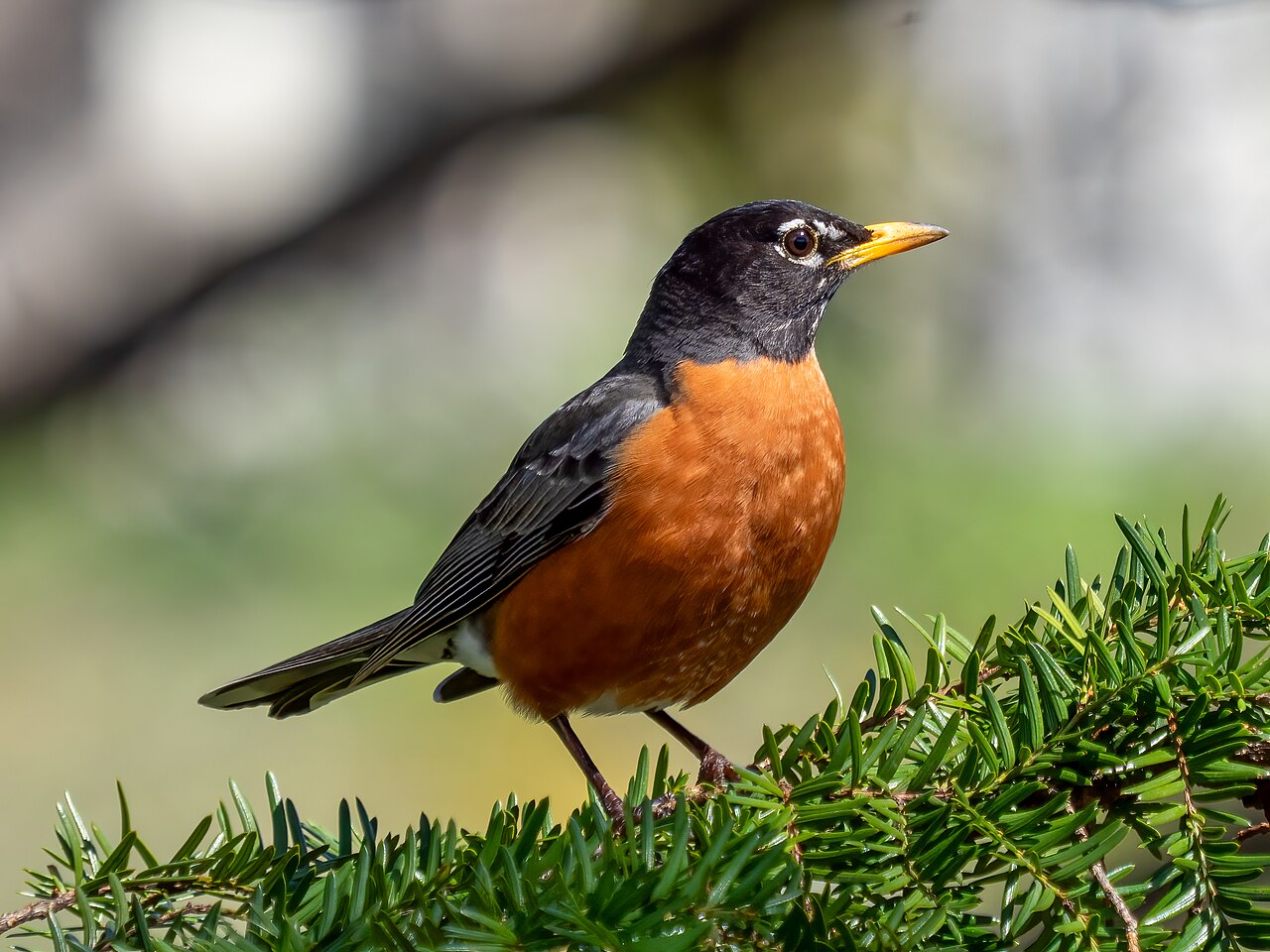
The American Robin is a thrush, a kind of songbird. It is easy to spot. Look for a reddish-orange breast and a brown back. A robin is about as long as a school ruler, around 9 to 11 inches. You might hear it before you see it. The male sings a cheery, rolling carol, and robins are often the first birds singing as the sun comes up.
The American Robin is a familiar thrush, a family of songbirds, and one of the most recognizable birds you will meet at a forest edge. Adults have a brown back and a reddish-orange breast, while females are a little duller than males. They measure about 23 to 28 centimeters long (roughly 9 to 11 inches) with a wingspan of 31 to 41 centimeters. The male's song is a cheery carol built from short notes strung together. Robins are often among the very first songbirds to sing as dawn breaks, so listen for them early in the morning.
Where It Lives
Fact block — copy it for your StoryMap
Robins live across most of North America. They breed as far north as Alaska and Canada and spend winter along the Pacific Coast, which includes Washington. Near the Hoh Rain Forest, look for them at the edges of the woods and in open, grassy spots, not deep inside the dark forest. Robins also do well near farms and towns. Watch the ground, because that is where they hunt for food.
The American Robin lives across most of North America, breeding from Alaska and Canada south toward Mexico and Florida, and wintering along the Pacific Coast, which includes Washington State and the Olympic Peninsula. It is a bird of woodland edges and open ground rather than the deep, shaded interior of the rainforest. Around the Hoh Rain Forest you are most likely to find robins where the forest opens into meadows, clearings, and grassy areas, and they also thrive near farmland and towns. They forage mainly on the ground, so open patches with soft soil are perfect places to watch one hunt.
Its Role in the Food Web
Fact block — copy it for your StoryMap
Robins eat two main things. About 40 percent of their food is small creatures like earthworms, beetle grubs, caterpillars, and grasshoppers. The other 60 percent is fruit and berries. A robin finds worms by sight, running a few steps and then stopping to look. Robins are food too. Hawks, cats, and big snakes hunt them, and raccoons raid their nests.
The American Robin sits in the middle of the food web, both eating and being eaten. Its diet is about 40 percent small invertebrates (animals without backbones) such as earthworms, beetle grubs, caterpillars, and grasshoppers, and about 60 percent wild and cultivated fruits and berries. Robins forage on the ground with a run-and-stop motion and can locate worms by sight. Robins are also prey: Accipiter hawks, cats, and larger snakes hunt adults, while raccoons often raid their nests. Without robins, many predators would lose a reliable meal.
Fast Facts
Fact block — copy it for your StoryMap
- Scientific name: Turdus migratorius
- Size: about 23 to 28 cm long, with a 31 to 41 cm wingspan
- Diet: roughly 40 percent insects and worms, 60 percent fruits and berries
- Eggs: three to five blue-green (cyan) eggs, hatching after about 14 days
- Population: about 370 million, the most abundant landbird in North America
- Conservation status: Least Concern (IUCN)
Where these facts come from
U.S. Fish & Wildlife Service · Wikipedia · iNaturalist — real photos & sightings