Wild Files: El Yunque · Species File No. 19 · Fern
Tree Fern
Cyathea arborea
Meet the Tree Fern
Fact block — copy it for your StoryMap
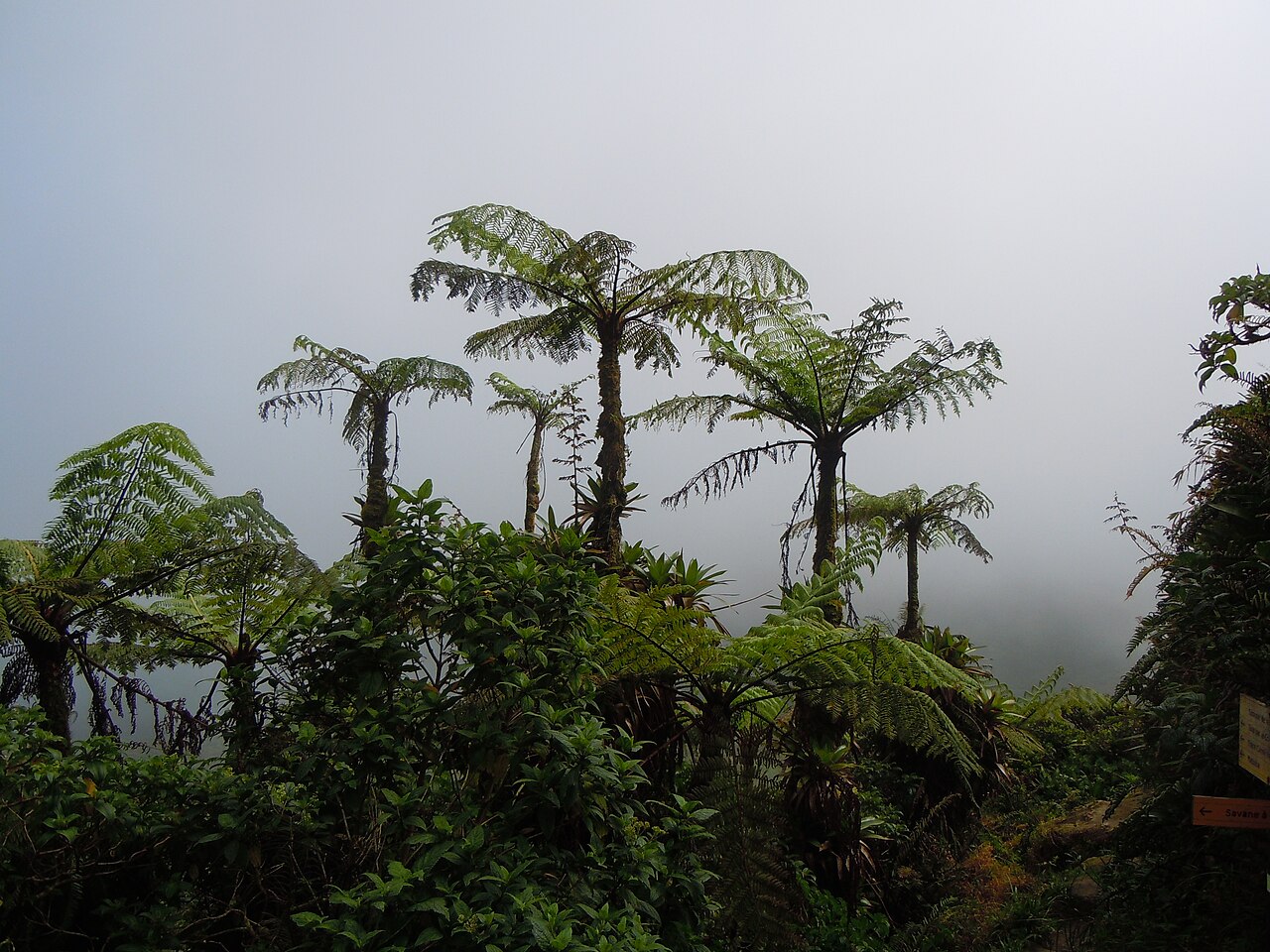
Say hello to the tree fern, also called the helecho gigante, which means giant fern in Spanish. Most ferns stay low to the ground, but this one grows a tall, trunk-like stem and can reach about 27 feet high. Its trunk has no thorns. On top sits a crown of ten or more leaves, called fronds, spread out like an open fan. New fronds start tightly rolled and slowly unroll as they grow.
Meet the tree fern, known in Spanish as the helecho gigante (giant fern) or palo camarón. Unlike the small ferns you might know, this one builds a tall, trunk-like stem and can stand about 27 feet tall. The thornless trunk measures roughly three to five inches across, with a hard outer layer wrapped around a soft, white core. At the top, a crown of ten or more leaves called fronds fans out in a wide circle. Young fronds begin tightly coiled and unfurl as they mature. Like all ferns, it makes no flowers or seeds. Instead it reproduces with tiny spores that form in small cases on the underside of its fronds.
Where It Lives
Fact block — copy it for your StoryMap
The tree fern is a Caribbean plant. It grows in Puerto Rico, including El Yunque National Forest, and on nearby islands such as Cuba, Jamaica, and Hispaniola. You can also find it down through the Lesser Antilles, from the Virgin Islands all the way to Tobago. This fern likes wet tropical forests where rain falls often and the air stays damp. That steady moisture helps its big, fanned-out fronds stay green and healthy all year.
The tree fern is a true Caribbean native. It grows across the islands, including Cuba, Jamaica, and Hispaniola (Haiti and the Dominican Republic), and through the Lesser Antilles from the Virgin Islands south to Tobago. In Puerto Rico it lives in El Yunque National Forest, the only tropical rainforest in the U.S. National Forest System. This species thrives in wet tropical forests, the kind of moist, rainy woodland where humidity stays high. That constant dampness suits a plant whose wide crown of fronds needs plenty of water, which is why these ferns flourish in the rainforest's wettest, greenest corners.
A Forest Pioneer
Fact block — copy it for your StoryMap
The tree fern can grow under the shady forest canopy, but it really shines when the forest gets shaken up. When a landslide or a hurricane knocks down trees, it leaves a sunny open gap. Tree ferns are quick to move into these clearings and grow. Scientists call plants that rush into new open spaces pioneers. By filling in bare spots after big storms, the tree fern helps the rainforest heal and grow back green again.
The tree fern can survive under the dim forest canopy, but it depends on disturbance to truly thrive. Natural events such as landslides and hurricanes tear openings in the forest, letting sunlight pour down to the ground. The tree fern is a pioneer, a plant that quickly colonizes these fresh gaps and clearings. This matters in El Yunque, a forest shaped by powerful storms. After the wind topples older trees, fast-growing tree ferns help cover the bare, broken ground, shading the soil and giving the rainforest a head start on growing back. In a place built around storms and recovery, this fern is part of how the forest repairs itself.
Fast Facts
Fact block — copy it for your StoryMap
- Spanish names: helecho gigante (giant fern) and palo camarón
- Height: can reach about 27 feet tall
- Trunk: thornless, 3 to 5 inches across, with a hard outside and a soft white core
- Fronds: a crown of 10 or more fan-shaped leaves that unfurl from tight coils
- Reproduces by: spores in small cases under its fronds, not seeds
- Found in: Caribbean wet forests, including El Yunque in Puerto Rico
Where these facts come from
U.S. Fish & Wildlife Service · Wikipedia · iNaturalist — real photos & sightings