Wild Files: El Yunque · Species File No. 15 · Tree
Roble de Sierra
Tabebuia rigida
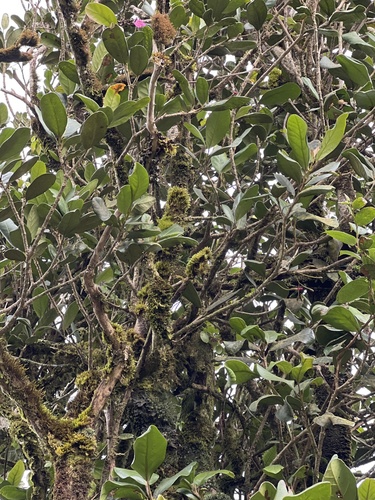
Meet the Roble de Sierra
Fact block — copy it for your StoryMap
The Roble de Sierra is a small tree that grows only in Puerto Rico and nowhere else in the world. A plant found in just one place is called endemic, and this tree is endemic to the island. People also call it Roble de guayo. Its scientific name is Tabebuia rigida, and it belongs to the same plant family as trumpet trees. It is famous for being short and tough, living high up where the air is cool and wet.
The Roble de Sierra, or Tabebuia rigida, is a tree that grows nowhere on Earth except Puerto Rico. Scientists call a species that lives in only one place endemic, and this tree is endemic to the island. Some people also know it as Roble de guayo. It is part of the Bignoniaceae family, the same group as trumpet trees. Unlike tall rainforest giants, this tree stays small and twisted, and it is one of the most common trees in the highest, cloudiest forests of Puerto Rico's mountains, where few other trees can survive.
Where It Lives
Fact block — copy it for your StoryMap
The Roble de Sierra grows in the Sierra de Luquillo, the mountains that hold El Yunque. You can find it near the very top, in the dwarf forest, also called the cloud forest. This forest sits above about 900 meters, near the peaks where clouds wrap around the trees almost every day. It is wet, windy, and cool up there. Few trees can handle it, but the Roble de Sierra is one that can, growing short and sturdy among the mist.
The Roble de Sierra lives in the Sierra de Luquillo, the mountain range that contains El Yunque National Forest. It thrives near the summits in the dwarf forest, sometimes called the cloud forest, which begins above about 900 meters in elevation. Up at these peaks, clouds settle over the mountaintops almost constantly, soaking the trees in mist and chilling the air. The wind is strong and the soil is thin, so trees here stay short and stunted instead of growing tall. The Roble de Sierra is one of the predominant trees of this zone, and it is in fact the most common tree in the Luquillo dwarf forest.
Its Job in the Forest
Fact block — copy it for your StoryMap
Even though it is small, the Roble de Sierra has a big job. The dwarf forest sits on steep, rocky peaks where heavy rain could wash the soil away. The roots of this tree and its neighbors grip the ground and hold the soil in place, protecting the peaks from erosion, which is when rain and wind carry soil away. Without these tough little trees, the mountaintops would be much more bare. So the Roble de Sierra helps keep the top of El Yunque covered and alive.
The Roble de Sierra may be small, but it does important work at the top of the mountains. The dwarf forest grows on steep, exposed peaks that take a beating from constant rain, clouds, and wind. The roots of the Roble de Sierra and the other dwarf-forest trees grip the thin soil and hold it together, protecting the peaks from erosion, the process where water and wind strip soil away. Only a few species can survive these harsh conditions, which makes the ones that do, like this tree, especially valuable. By anchoring the soil, the Roble de Sierra helps keep the highest reaches of El Yunque green and stable for everything that lives there.
Fast Facts
Fact block — copy it for your StoryMap
- Scientific name: Tabebuia rigida
- Spanish names: Roble de sierra, also Roble de guayo
- Family: Bignoniaceae, the trumpet tree family
- Found only in: Puerto Rico, where it is endemic
- Home: The dwarf or cloud forest above about 900 meters in the Sierra de Luquillo
- Status: Near Threatened on the IUCN Red List
Where these facts come from
Royal Botanic Gardens, Kew (POWO) · Wikipedia · iNaturalist — real photos & sightings