Wild Files: El Yunque · Species File No. 23 · Invertebrate
Freshwater River Shrimp
Atya / Xiphocaris spp.
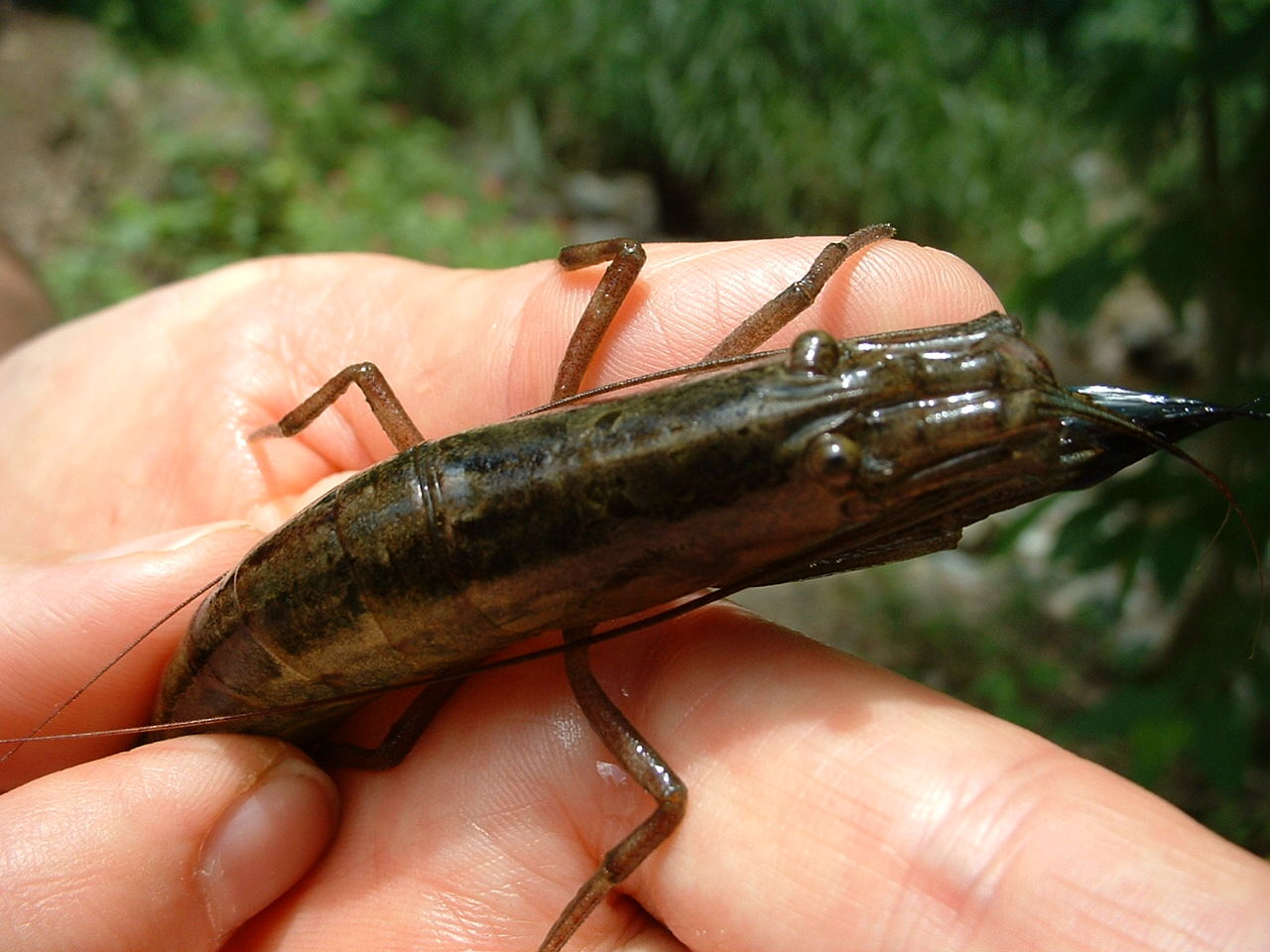
Meet the Freshwater River Shrimp
Fact block — copy it for your StoryMap
Freshwater river shrimp are crustaceans that live in Puerto Rico's rivers and streams. A crustacean is an animal with a hard shell and jointed legs, like a crab or lobster. One kind, Atya lanipes, is called the spinning basket shrimp in English and guábara or gata in Spanish. In some places, people also call it chágara. Scientists have been studying shrimp like these since the 1800s.
Freshwater river shrimp are crustaceans, the same group that includes crabs and lobsters, with a hard outer shell and jointed legs. They are common in Puerto Rico's rivers, streams, creeks, and freshwater pools. One well-known species, Atya lanipes, goes by the English name spinning basket shrimp and the Spanish names guábara and gata; in some places it is also called chágara. Scientists have been studying Caribbean freshwater crustaceans since the 1800s, and interest in their biology and their role in stream ecosystems has grown a lot in recent years. In all, 17 shrimp species from eight genera live in Puerto Rico's fresh waters.
Where It Lives and Its Amazing Journey
Fact block — copy it for your StoryMap
River shrimp live in mountain streams high up in the hills, but they also need the sea. This is called being amphidromous, which means moving between fresh water and salt water. Grown-up shrimp lay eggs in headwater streams high in the mountains. The tiny babies, called larvae, float downstream all the way to the salty ocean. After a few months, the young shrimp turn around and climb back up the river to grow up.
Freshwater river shrimp live both near river mouths and in high-altitude mountain streams, and their life cycle ties the two together. They are amphidromous (am-FID-ro-mus), meaning they migrate between fresh water and the sea during different life stages. Adults mature and reproduce in headwater streams high in the mountains. Their larvae, the tiny newly hatched young, are carried downstream to estuaries and the ocean, where they may spend several months developing in salty water. Then the juveniles migrate back upstream to finish growing. Scientists have studied this upstream shrimp migration in the Luquillo Experimental Forest in Puerto Rico.
Why It Matters to the Stream
Fact block — copy it for your StoryMap
River shrimp are a big part of a healthy stream. Some are filter feeders, which means they strain tiny bits of food from the water. Others are scavengers that clean up leftover scraps. Shrimp also become food for fish, crabs, and other animals, so they help connect the whole food web. When dams, pipes, or road crossings block a stream, shrimp cannot make their journey to the sea and back. Scientists build fish ladders and remove barriers so the shrimp can travel safely.
Freshwater river shrimp are key players in Puerto Rico's stream food webs. Different species feed in different ways: some are filter feeders that strain tiny particles from the water, while others are deposit feeders, scavengers, or omnivores that recycle leftover material. In turn, shrimp are an important food source for larger predators like fish, crabs, and riparian and terrestrial animals, linking the stream to the land around it. Because the shrimp must migrate to the sea and back, barriers like dams, water intakes, culverts, and road crossings can cut off their route. To help, biologists remove barriers, replace culverts, and build fish ladders so the shrimp can keep making their journey.
Fast Facts
Fact block — copy it for your StoryMap
- Scientific name: Atya lanipes, one of Puerto Rico's freshwater river shrimp
- Spanish names: guábara, gata, and chágara
- Group: a crustacean, related to crabs and lobsters
- Amazing journey: amphidromous — larvae drift to the sea, then juveniles climb back upstream
- Home: mountain streams of Puerto Rico, including the Toro Negro State Forest
- Status: listed as Least Concern by the IUCN
Where these facts come from
U.S. Fish & Wildlife Service · Wikipedia · iNaturalist — real photos & sightings