Wild Files: El Yunque · Species File No. 01 · Bird
Puerto Rican Parrot
Amazona vittata
Also called the cotorra in Spanish · iguaca in Taíno
EndangeredFound only here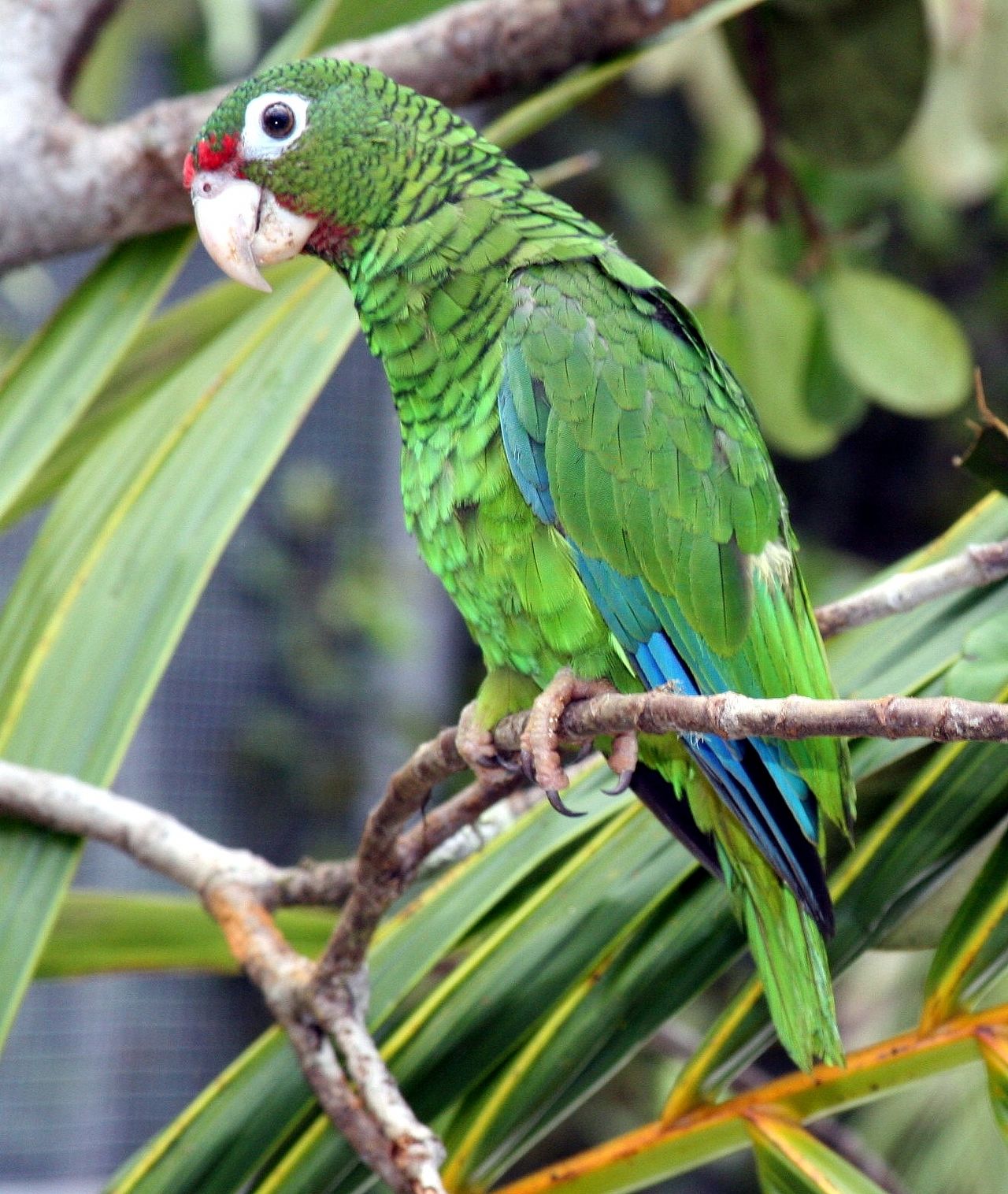
Meet the Puerto Rican Parrot
Fact block — copy it for your StoryMap
The Puerto Rican parrot is a bright green bird about a foot long, with a red patch on its forehead, white rings around its eyes, and blue feathers at the tips of its wings. In Spanish people call it the cotorra puertorriqueña. Long ago the Taíno people named it iguaca, a word that sounds like the call the parrot makes when it flies. It is found only in Puerto Rico and nowhere else on Earth.
The Puerto Rican parrot, known in Spanish as the cotorra puertorriqueña, is a vivid green bird roughly 28 to 30 centimeters long (about a foot). Look closely and you will spot a red forehead, white rings circling its eyes, and dark blue flight feathers in its wings. The Taíno, Puerto Rico's Indigenous people, called it iguaca, an onomatopoeic name that imitates the parrot's flight call. This species is found nowhere else in the world, which makes every single bird precious to the island that is its only home.
Where It Lives
Fact block — copy it for your StoryMap
Today wild Puerto Rican parrots live in mountain forests, including El Yunque National Forest. They need old forests with big, mature trees, because they nest inside hollows in tree trunks. A favorite nesting tree is the palo colorado, an ancient tree with cavities the parrots can raise chicks in. They eat fruits, flowers, and tender shoots from the treetops. The sierra palm is a favorite food, and tabonuco fruit becomes important when other foods run low.
Puerto Rican parrots once lived all over the island, but today wild flocks survive in protected mountain forests, including El Yunque National Forest. They depend on mature, old-growth forest because they are secondary cavity nesters — meaning they raise their chicks inside hollows in tree trunks rather than building open nests. Old trees like the palo colorado and tabonuco provide these deep cavities, which is why young or cleared forests cannot support them. High in the canopy the parrots forage on flowers, fruits, leaves, bark, and nectar from more than 50 kinds of plants. The sierra palm is a preferred food, and when other fruits grow scarce around October, tabonuco fruit becomes an important backup.
A Bird We Are Fighting to Save
Fact block — copy it for your StoryMap
The Puerto Rican parrot is endangered, which means very few are left. People once cut down the old forests it needs for farms, so the parrots lost their homes. Hawks hunt them, rats can eat their eggs and chicks, and big storms can hurt them. In 2017 Hurricane María struck hard and only a few wild parrots survived. But people did not give up. Scientists raise parrots in special aviaries and release them back into the forest, and they protect the old trees the birds need. Every chick that hatches is a step toward bringing this bird back.
The Puerto Rican parrot is critically endangered — at one low point in 1975, only 13 wild birds remained. The main reason for its decline was the clearing of mature forests for farming, which erased the old trees the parrots need to nest. Predators like hawks and introduced black rats, plus competition from other animals, add to the danger. Powerful storms are a serious threat too: after Hurricane María tore through in 2017, scientists estimated that only a small fraction of the wild parrots survived. Yet a recovery program that began in 1968 keeps working. Teams breed parrots in aviaries such as the Iguaca Aviary at El Yunque, protect their forest, and release captive-raised birds back into the wild — including parrots set free in El Yunque in early 2020. With each new fledgling, the cotorra's future grows a little brighter.
Fast Facts
Fact block — copy it for your StoryMap
- Spanish name: cotorra puertorriqueña (the Taíno called it iguaca)
- Scientific name: Amazona vittata
- Size: about 28 to 30 cm long (roughly a foot)
- Looks: bright green with a red forehead, white eye-rings, and blue wing feathers
- Nest: inside hollows in old trees like the palo colorado
- Status: endangered, found only in Puerto Rico
Where these facts come from
U.S. Fish & Wildlife Service · Wikipedia · iNaturalist — real photos & sightings