Wild Files: El Yunque · Species File No. 10 · Reptile
Puerto Rican Boa
Chilabothrus inornatus
Found only here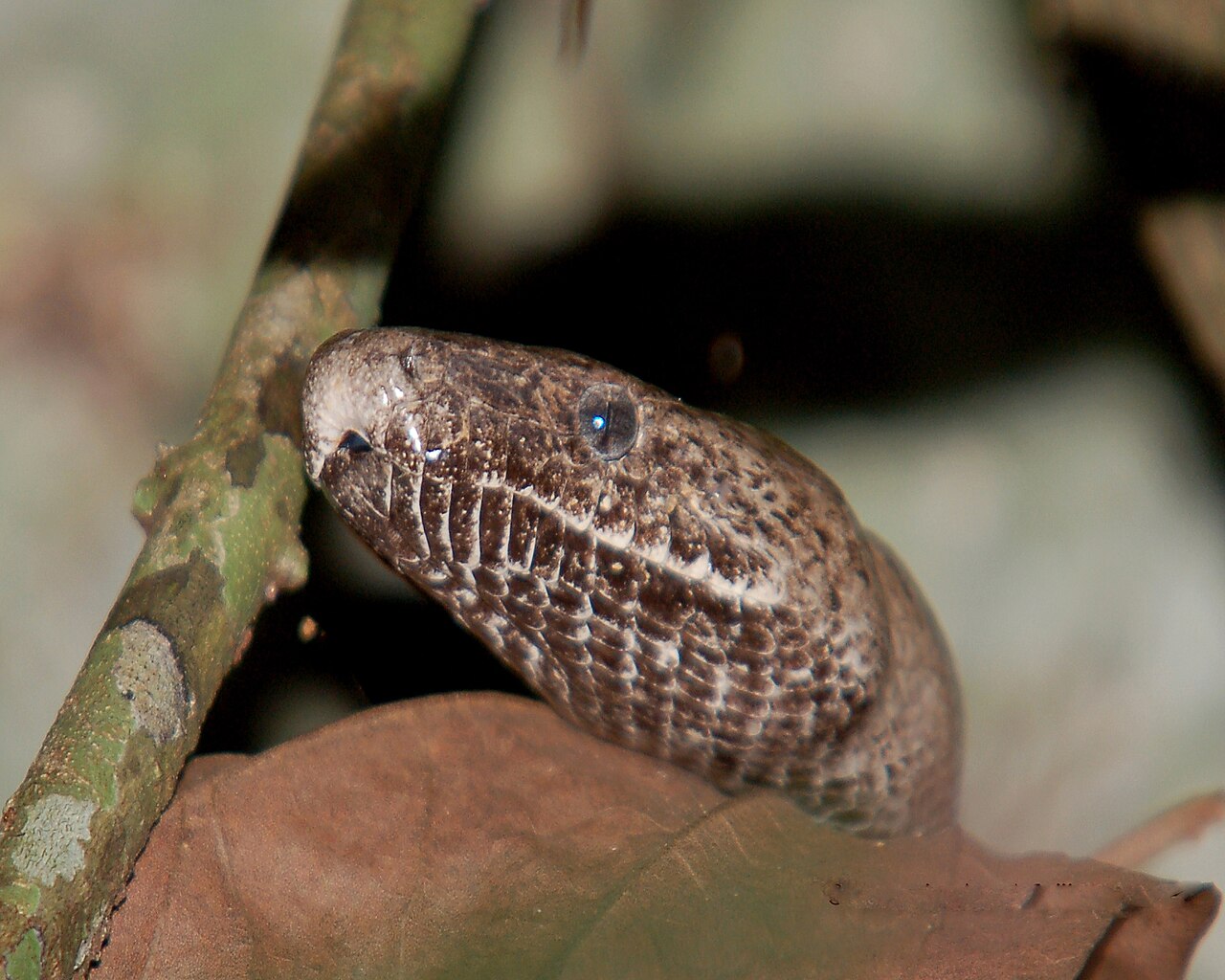
Meet the Puerto Rican Boa
Fact block — copy it for your StoryMap
The Puerto Rican boa is the largest snake in Puerto Rico. People here also call it the culebrón, which means "big snake." It can grow from about 3 to 6.5 feet long. Its skin is tan, reddish-brown, or very dark brown with darker spots. This snake is not venomous, which means it has no poison in its bite. Instead it is a constrictor: it wraps its body around its prey and squeezes.
The Puerto Rican boa (Chilabothrus inornatus) is the largest snake found in Puerto Rico. Puerto Rican families know it as the culebrón, or "big snake." Adults usually measure about 3 to 6.5 feet long, with colors ranging from tan to reddish-brown to very dark brown, marked with darker bars or spots. It is completely non-venomous and does not attack people. Like other boas, it is a constrictor: it wraps several coils around its prey and squeezes until the animal stops breathing. It is mostly active at night.
Where It Lives
Fact block — copy it for your StoryMap
This boa lives only on the island of Puerto Rico. You can find it across the island, but it is most common in the karst region in the north. Karst is rocky land full of caves and rounded hills made of limestone. The boa likes rocky spots, trees, rotting stumps, caves, and forests. It can live from the seashore all the way up to about 3,280 feet high in the mountains. It hunts rats, bats, lizards, birds, and frogs.
The Puerto Rican boa lives only on the island of Puerto Rico, spread widely but not evenly. It is most abundant in the karst region of northern Puerto Rico, a landscape of limestone caves and rounded "haystack" hills. It is less common in the drier south. You can find it among rocks, trees and branches, rotting stumps, caves, and even forested towns and stream edges. It lives from sea level up to about 3,280 feet. Its menu includes rats, bats, lizards, birds, and frogs. One clever trick: it hangs near cave openings to snatch bats right out of the air as they fly past.
Why This Snake Needs Our Help
Fact block — copy it for your StoryMap
The Puerto Rican boa is endemic to Puerto Rico. Endemic means it lives naturally in this one place on Earth and nowhere else in the wild. If it disappeared here, it would be gone everywhere. That is why island animals need extra care. This boa is a protected endangered species, which means laws help keep it safe. Long ago, people cut down forests, and animals brought to the island, like the mongoose, may have hurt the boa too. The good news: it has started to recover.
The Puerto Rican boa is endemic to Puerto Rico, meaning it is native to this single island and lives nowhere else on the planet in the wild. That is what makes island species so special and so fragile. If an endemic animal vanishes from its one home, it is lost forever, with no other population to replace it. This boa is listed as a protected endangered species, so laws help guard it. Its numbers fell in the past because of deforestation (the clearing of forests). Scientists also suspect the introduced mongoose may have preyed on it, though there is no direct evidence. Today, Puerto Rican boas may even be eaten by invasive boa constrictors. Encouragingly, scientists have noted some recovery in recent years.
Fast Facts
Fact block — copy it for your StoryMap
- Spanish name: culebrón ("big snake")
- Size: about 3 to 6.5 feet long
- How it hunts: non-venomous constrictor that squeezes its prey
- Found only in: Puerto Rico (endemic), mostly the northern karst region
- Eats: rats, bats, lizards, birds, and frogs
- Status: protected endangered species, now showing some recovery
Where these facts come from
U.S. Fish & Wildlife Service · Wikipedia · iNaturalist — real photos & sightings