Wild Files: El Yunque · Species File No. 08 · Bird
Peregrine Falcon
Falco peregrinus
Meet the Peregrine Falcon
Fact block — copy it for your StoryMap
The peregrine falcon is one of the fastest hunters in the world. It is a raptor, which means a bird of prey that catches other animals to eat. When it spots a bird in the air, it folds its wings and dives. This dive is called a stoop. Scientists think a diving peregrine can go more than 200 miles per hour. That may make it the fastest animal on Earth. Its name comes from a Latin word meaning traveler.
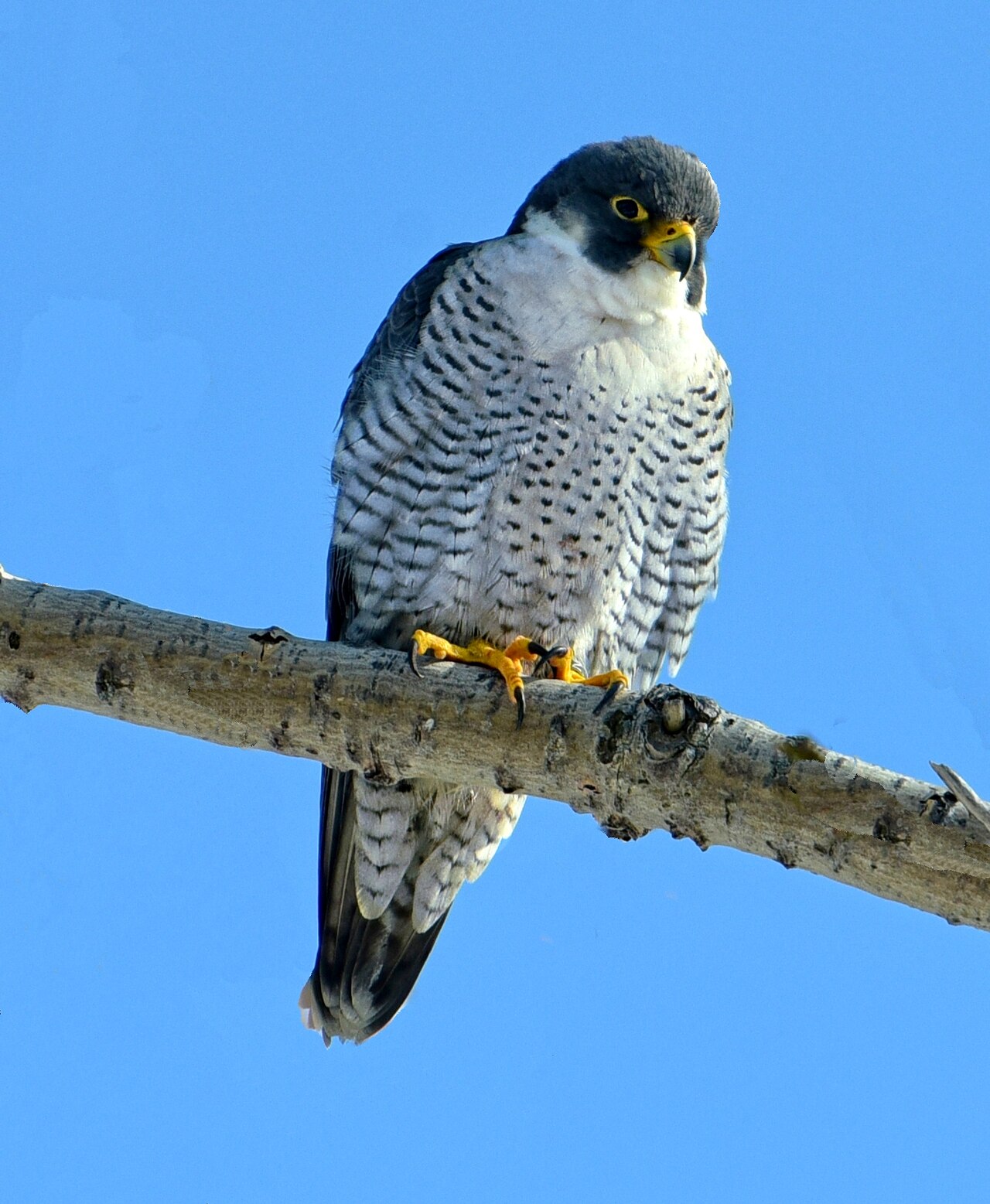
The peregrine falcon may be the fastest animal on the planet. It is a raptor, a bird of prey, and it hunts other birds in midair. To attack, it climbs high and then folds its wings into a steep dive called a stoop. Scientists estimate a diving peregrine travels more than 200 miles per hour, and one recorded dive reached an astonishing 242 miles per hour. Up close it is striking, with a blue-grey back, a black head, barred white underparts, and a black moustache mark along each cheek. The name peregrine comes from a Latin word meaning traveler or wanderer, a perfect fit for a bird this far-roaming.
Where It Lives and Travels
Fact block — copy it for your StoryMap
You will not find peregrines nesting deep inside El Yunque. They live almost everywhere on Earth except very cold poles, the tallest mountains, and most tropical rainforests. They like open places like cliffs, river valleys, and coastlines, and many now live in cities. Falcons that nest in the cold Arctic fly long distances south each winter, and some travel all the way to Central and South America.
The peregrine is the world's most widespread raptor, found on nearly every continent. It does not nest inside tropical rainforests like El Yunque, but it is a famous long-distance traveler. Peregrines favor open country: mountain ranges, river valleys, and coastlines, and they have become a successful example of urban wildlife, nesting on skyscraper ledges, cathedrals, and other tall structures. They usually build a simple scrape, a shallow dip on a cliff ledge or tall structure, instead of a built nest. Falcons that breed in the Arctic migrate great distances each winter, and these wanderers travel as far as Central and South America on their journeys south.
Its Job in the Food Web
Fact block — copy it for your StoryMap
The peregrine is a powerful predator, an animal that hunts but is rarely hunted itself. It feeds almost entirely on other birds, like pigeons, doves, ducks, songbirds, and shorebirds. Long ago, a chemical called DDT made peregrine eggshells too thin, and the birds nearly disappeared. People banned the chemical and helped them recover. In 1999, the American peregrine falcon was taken off the endangered list.
The peregrine sits near the top of the bird food web, hunting many species while only larger raptors, such as big owls and eagles, occasionally hunt it. Its diet is made up almost entirely of medium-sized birds, from pigeons and doves to ducks, songbirds, and shorebirds, and in North America it preys on a wider variety of bird species than any other raptor. Its story is also one of hope. In the 1950s through 1970s, the pesticide DDT built up in the falcons' bodies and thinned their eggshells so badly that fewer eggs survived to hatch, and populations crashed. After DDT was restricted and people worked to protect them, the birds bounced back, and the American peregrine falcon was removed from the U.S. endangered species list in 1999.
Fast Facts
Fact block — copy it for your StoryMap
- Scientific name: Falco peregrinus
- Top speed: more than 200 mph in a hunting dive, called a stoop
- Size: body 13 to 23 inches long, with a wingspan of about 29 to 47 inches
- Diet: almost entirely other birds, such as pigeons, ducks, songbirds, and shorebirds
- Range: nearly worldwide, the most widespread raptor on Earth
- Comeback: nearly wiped out by the pesticide DDT, then removed from the U.S. endangered list in 1999
Where these facts come from
National Park Service · Wikipedia · iNaturalist — real photos & sightings