Wild Files: El Yunque · Species File No. 09 · Bird
Pearly-eyed Thrasher
Margarops fuscatus
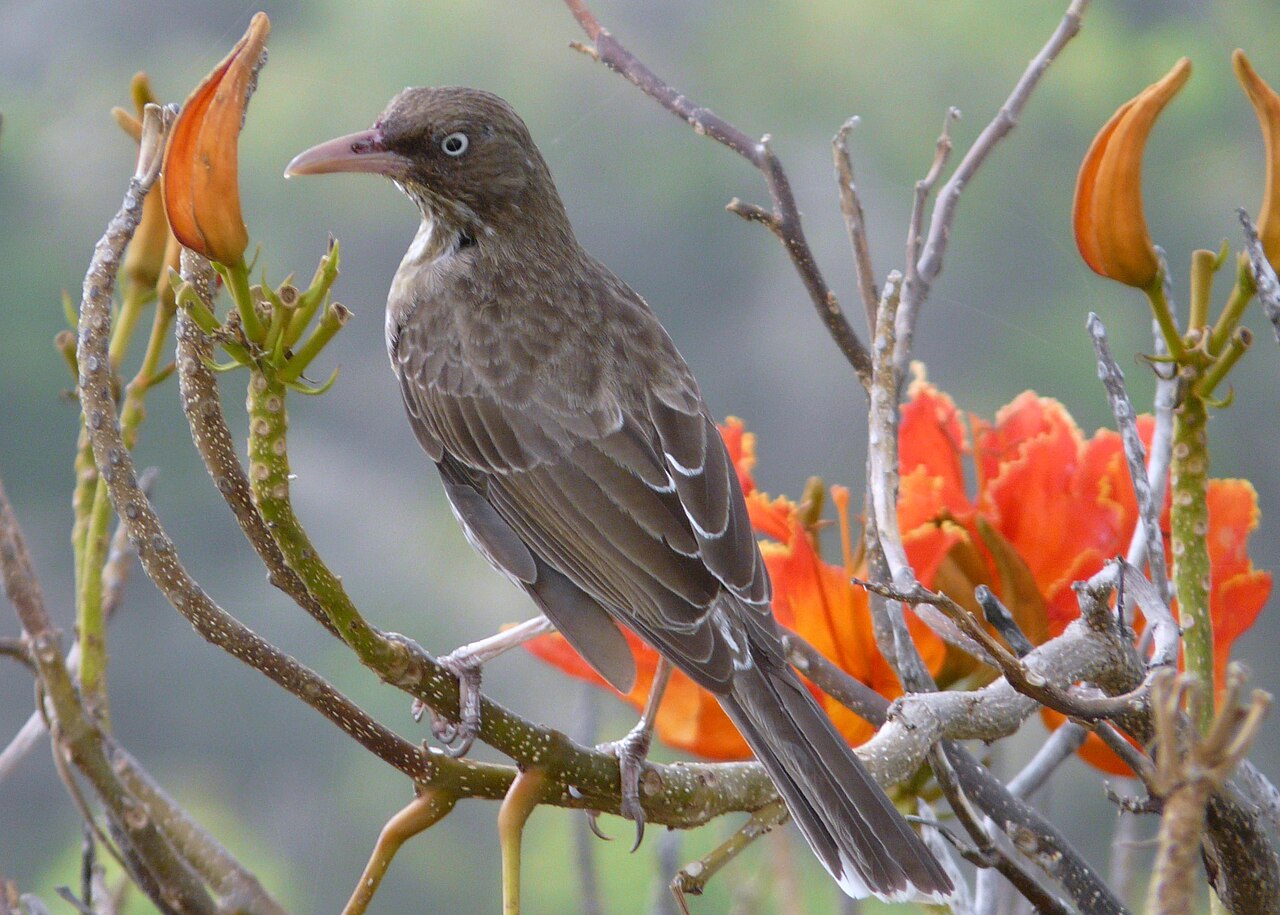
Meet the Pearly-eyed Thrasher
Fact block — copy it for your StoryMap
The pearly-eyed thrasher is a bold brown bird of the Caribbean. Its scientific name is Margarops fuscatus. It is the biggest bird in its family, the mimids, growing about 28 to 30 centimeters (11 to almost 12 inches) long. Its name comes from its eye, which is pale and pearly-white. This bird is an omnivore, which means it eats both plants and animals. It is known for being tough and not shy at all.
The pearly-eyed thrasher (Margarops fuscatus) is the largest member of the mimid family, the group of birds that includes mockingbirds and thrashers. It grows to about 28 to 30 centimeters (11 to 11.8 inches) long. Its name points to its most noticeable feature: a pale, pearly-white eye that stands out against its brown feathers. Scientists describe it as an aggressive, opportunistic omnivore (an animal that eats both plants and other animals). It will go after almost any food it can find, which is one reason this bird does so well across the islands of the Caribbean.
Where It Lives
Fact block — copy it for your StoryMap
This thrasher lives across the Caribbean, not just in one place. You can find it on many islands, from the Bahamas in the north down to the Grenadines in the south. It lives in Puerto Rico and the Virgin Islands, and even on Mona Island near Puerto Rico. It likes bushes and trees, including mountain forests and coffee plantations. So while it can show up in many forests, it is really a bird of the whole Caribbean region.
The pearly-eyed thrasher ranges widely across the Caribbean. It is found on islands from the Bahamas in the north all the way south to the Grenadines, including Puerto Rico, the Virgin Islands, Mona Island off Puerto Rico, and many islands in the Lesser Antilles. It makes its home in bushes and trees, especially in mountain forests and coffee plantations. So although you might spot one in Puerto Rico's rainforest, this is not a species found only in one forest. It is a true island-hopper, comfortable in many kinds of Caribbean woodland and even in places people have changed, like farms and plantations.
Its Job in the Forest
Fact block — copy it for your StoryMap
The pearly-eyed thrasher eats many things, so it helps move energy through the forest food web. It feeds mostly on large insects, but also eats fruits and berries, and sometimes lizards, frogs, small crabs, and even other birds' eggs and baby birds. It nests in holes called cavities. Here is the tricky part: in Puerto Rico it fights the endangered Puerto Rican parrot for nesting holes, and may even destroy the parrot's eggs. Nature can be complicated.
As an aggressive, opportunistic omnivore, the pearly-eyed thrasher plays many roles in the food web. It feeds mainly on large insects but also eats fruits and berries, and will sometimes take lizards, frogs, small crabs, and the eggs and nestlings of other birds. It nests in cavities (sheltered holes in trees or rocks), and this is where its story gets complicated. In Puerto Rico, the thrasher competes with the critically endangered Puerto Rican parrot for nesting sites, and it may even destroy the parrot's eggs. The thrasher is not doing anything wrong; it is just being a thrasher. But its success makes protecting the rare parrot harder, a real example of how nature is full of tangled connections rather than simple good guys and bad guys.
Fast Facts
Fact block — copy it for your StoryMap
- Scientific name: Margarops fuscatus
- Family record: the largest species in the mimid family (mockingbirds and thrashers)
- Size: about 28 to 30 centimeters (11 to 11.8 inches) long
- Diet: an omnivore that eats large insects, fruits, berries, lizards, frogs, small crabs, and other birds' eggs and nestlings
- Nesting: nests in cavities and competes with the endangered Puerto Rican parrot for nest holes
- Conservation status: listed as Least Concern on the IUCN Red List
Where these facts come from
U.S. Fish & Wildlife Service · Wikipedia · iNaturalist — real photos & sightings