Wild Files: El Yunque · Species File No. 14 · Tree
Palo Colorado
Cyrilla racemiflora
Meet the Palo Colorado
Fact block — copy it for your StoryMap
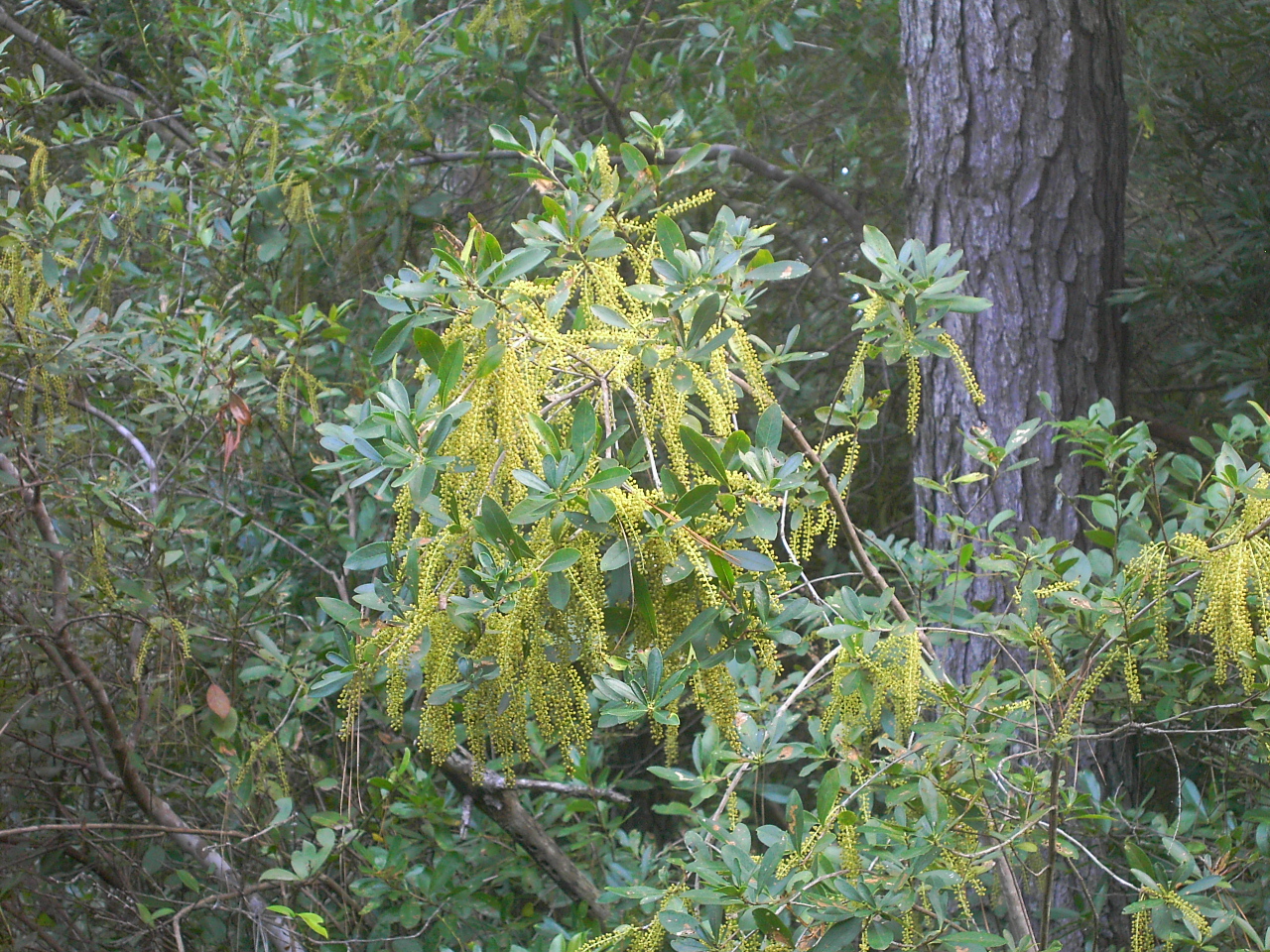
The Palo Colorado is a tree whose Spanish name means red wood, and you can guess why. On big trees the bark is reddish-brown and looks shaggy, like it is peeling in strips. In a tropical rainforest this tree can grow large, more than 49 feet tall and over 3 feet thick. In summer it grows many small white flowers packed together on long spikes. Its scientific name is Cyrilla racemiflora.
The Palo Colorado, or Cyrilla racemiflora, gets its Spanish name from its color. On large trees the thin bark is reddish-brown and often shaggy in appearance, while smaller trees have grayer, smoother bark. In a tropical rainforest it can become a large tree, growing to 49 feet or more tall and over 3 feet across. People also call it swamp titi or red titi. It is mostly evergreen, keeping its leaves all year, though some leaves turn a brilliant red before they fall. Each summer it blooms with small white flowers crowded along spikes called racemes, which can be 3 to 6 inches long.
Where It Lives
Fact block — copy it for your StoryMap
The Palo Colorado likes wet places. It grows in rainforests and swamps, along streams, and in soggy spots where the soil is acidic and sandy or peaty. You can find this tree across a wide stretch of the Americas. It grows in the southeastern United States, down through the Caribbean, into Mexico and Central America, and all the way to South America. The Caribbean is part of its home, and Puerto Rico is one of the Caribbean islands.
Water is the key to where this tree lives. The Palo Colorado grows in rainforests, swamps, bogs, and along streams, preferring acidic soils that are sandy or peaty. Its range is huge, stretching from the southeastern United States south through the Caribbean and Mexico, through Central America, and on to northern Brazil and Venezuela. The same tree looks very different depending on where it grows. In a tropical rainforest it becomes a large tree more than 49 feet tall, but in cooler temperate places it stays a shrub only about 13 feet tall. Where winters are colder, its leaves drop in autumn instead of staying green.
Its Job in the Forest
Fact block — copy it for your StoryMap
The Palo Colorado helps feed the forest. Its white summer flowers are loved by bees, and beekeepers prize the excellent honey the bees make from them. White-tailed deer find its leaves and shoots tasty too, and they browse the tree, which means they nibble its leaves. After flowering, the tree grows small yellow-brown seed pods called capsules that carry its seeds. This tree often grows in thick clusters that give cover to small forest animals.
The Palo Colorado is a useful link in the forest food web. Its white summer flowers attract bees, and beekeepers value the excellent honey those bees make from them, so the tree helps feed pollinators that visit many other plants. White-tailed deer browse the leaves and shoots, meaning they eat them as they pass by. After blooming, the tree forms yellow-brown capsules, dry seed pods that hold its seeds and help new trees begin. The Palo Colorado is also thicket-forming, often growing in dense clusters by sprouting new stems from its roots, and these tangles of growth give shelter to small animals.
Fast Facts
Fact block — copy it for your StoryMap
- Scientific name: Cyrilla racemiflora
- Spanish name: Palo colorado, meaning red wood
- Size: A large tree over 49 feet tall in tropical rainforests, a shrub of about 13 feet in cooler places
- Bark: Reddish-brown and shaggy on big trees
- Flowers: Small white blooms in summer, crowded on long spikes
- Visited by: Honeybees, plus deer that browse its leaves
Where these facts come from
USDA Forest Service · Wikipedia · iNaturalist — real photos & sightings