Wild Files: El Yunque · Species File No. 21 · Fungus
Bracket Fungi
Polyporales spp.
Meet the Bracket Fungi
Fact block — copy it for your StoryMap
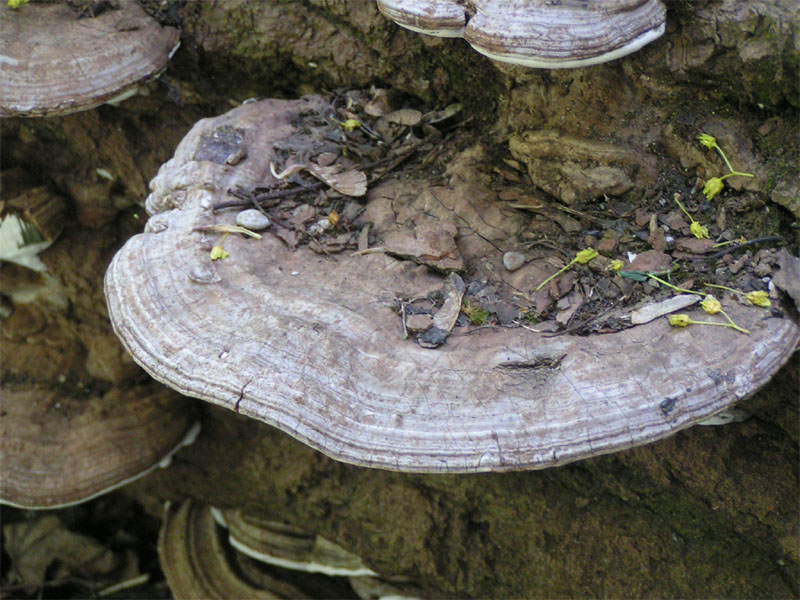
Bracket fungi are fungi that grow straight out of wood like little shelves. That is why people also call them shelf fungi or conks. They belong to a big group of fungi called Polyporales, with about 1,800 different kinds. Most soft mushrooms pop up fast and only stick around long enough to release their spores, but bracket fungi are tough. A single bracket can stay stuck to its log for months or even years. They are decomposers, which means they break down dead wood.
Bracket fungi grow in firm, shelf-like shapes that jut out from the sides of trees and logs, which is how they earned the names shelf fungi and conks. They are part of an order of fungi called Polyporales, a worldwide group of around 1,800 species. The shelf you see is the fruit body, the part that makes and releases spores, similar to how a mushroom is just one piece of a much larger fungus hidden inside the wood. Unlike soft mushrooms that emerge quickly and last only long enough to release their spores, these durable decomposers can persist for months or even years, slowly working on the wood the whole time.
Where It Lives
Fact block — copy it for your StoryMap
Bracket fungi live on wood. Look for them on living trees, on dying trees, and on dead wood that is still standing or has fallen to the ground. They grow all over the world. In a wet, shady rainforest there is plenty of damp wood for them, so keep your eyes on old logs and tree trunks. A few kinds even push up from buried wood, so they can look like they are growing right out of the soil.
Bracket fungi are wood lovers. Their fruit bodies typically appear on living or dying trees and on dead wood, whether it is still attached and standing or has already fallen. Polyporales are cosmopolitan, meaning they are found around the globe. Damp, shady woods give them exactly what they need, so fallen logs and rotting trunks are good places to search. Some species even fruit at ground level, rising from roots or from chunks of wood buried in the soil, which can make them look like they sprouted straight from the dirt.
Its Job in the Forest
Fact block — copy it for your StoryMap
Bracket fungi are the forest's recyclers. They are decomposers, which means they break down dead wood and turn it back into nutrients. Some kinds cause white rot, breaking down the tough part of wood called lignin. Others cause brown rot, breaking down the stringy part called cellulose and leaving brittle brown wood behind. By eating away at fallen logs, they shrink the pile of dead wood and help return its building blocks to the forest.
Bracket fungi do one of the most important jobs in any forest: they take dead wood apart. As decomposers, different species attack wood in different ways. White-rot fungi are efficient at degrading lignin, the decay-resistant glue that makes wood stiff, leaving softened cellulose behind. Brown-rot fungi instead break down the cellulose, leaving a brittle, brown lignin residue. Both kinds reduce the volume of dead wood on the forest floor and are an important part of the carbon cycle, the planet-wide path that carbon takes as it moves between living things, dead matter, the soil, and the air.
Fast Facts
Fact block — copy it for your StoryMap
- Group: Polyporales, an order of about 1,800 fungus species
- Other names: shelf fungi or conks
- What it does: a decomposer that breaks down dead wood
- Where it grows: on living, dying, and dead wood, standing or fallen
- Two ways to rot wood: white rot breaks down lignin, brown rot breaks down cellulose
- Staying power: a single bracket can last months or even years
Where these facts come from
National Park Service · Wikipedia · iNaturalist — real photos & sightings